Vision, Imagination, and Revolt

William Blake (1757–1827) is one of the earliest and most radical figures of Romanticism. Unlike later Romantic poets who focus on nature and reflection, Blake writes with intensity, symbolism, and spiritual urgency.
He believed poetry should awaken human perception. For Blake, the real struggle was not only political — it was mental and spiritual.
1. Blake Against Rationalism
Blake lived during the Enlightenment, a period that valued reason, order, and logic. But he believed that too much emphasis on reason made life mechanical and cold.
He wrote:
“Energy is Eternal Delight.”
For Blake, imagination is greater than reason. Human beings are not machines; they are creative and visionary.
Blake’s Idea of Human Power

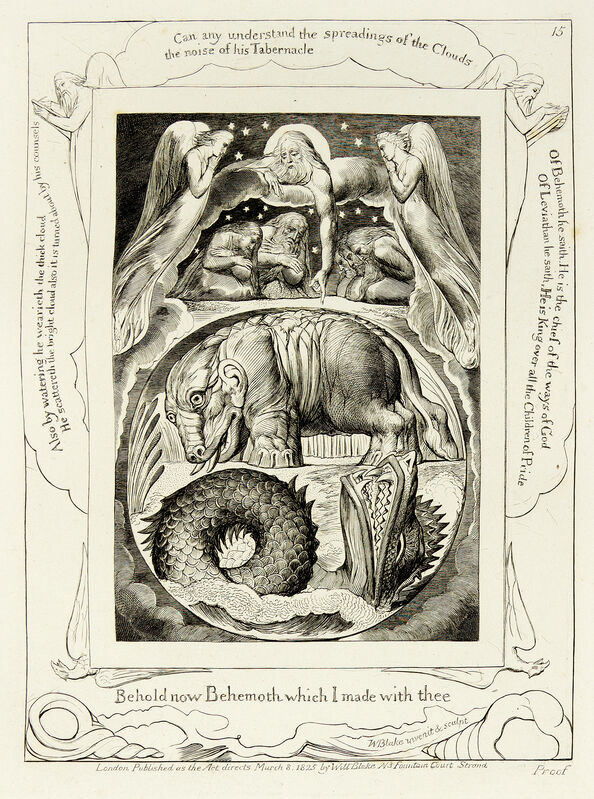
Blake’s art shows powerful symbolic figures. These are not decorations. They represent forces inside the human mind.
For example:
• Urizen — cold law and rigid reason
• Los — creative imagination
• Albion — humanity as a whole
Blake turns inner conflict into visual myth.
2. Innocence and Experience
Blake’s most famous work is Songs of Innocence and of Experience. He calls it:
“The Two Contrary States of the Human Soul.”
This means that human life is shaped by opposites.
In “The Lamb,” the world appears gentle and pure.
In “The Tyger,” the world appears powerful and terrifying.
Blake asks:
“Did he who made the Lamb make thee?”
He shows that beauty and danger come from the same source. Life is complex.
Innocence and Experience
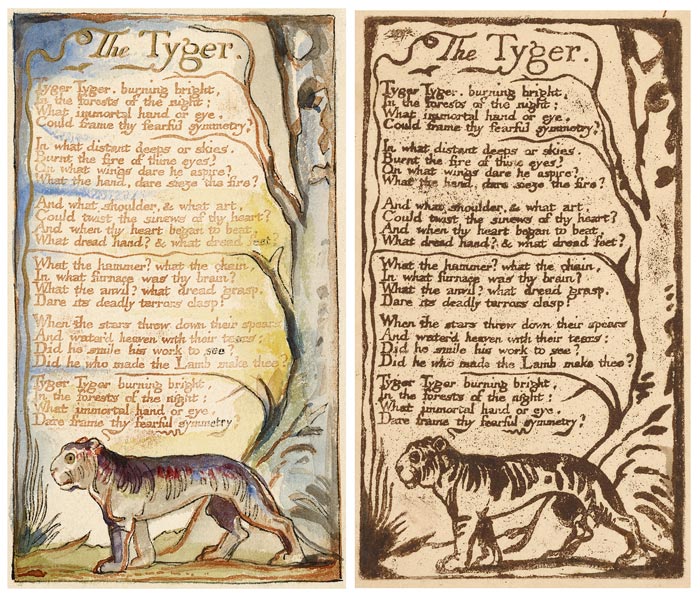
Blake’s illustrations make the contrast visible:
Innocence — light colors, open space, calm figures
Experience — darker tones, tension, powerful imagery
His poetry and art work together.
3. Social Criticism: “Mind-forg’d Manacles”
In his poem “London,” Blake writes about “mind-forg’d manacles.”
He believed society creates invisible chains:
• Religious authority
• Political control
• Social inequality
• Internal fear
These forces limit imagination. Blake wanted to break these mental chains.
Blake’s Visionary Style

Blake invented a method called illuminated printing. He engraved both text and image on the same plate. This made his books unique works of art.
His style shows:
• Movement and energy
• Symbolic bodies
• Spiritual light and shadow
• Dramatic tension
He did not separate poetry and painting. Both express imagination.
4. Why Blake Is an Early Romantic
Blake is called an early Romantic because he:
• Places imagination at the center of human life
• Rejects narrow rationalism
• Questions authority
• Believes perception shapes reality
• Sees poetry as revelation
Unlike Wordsworth, who turns to nature for healing, Blake turns inward and upward — toward vision and prophecy.
Conclusion
William Blake is one of the most original voices in English literature. He does not simply describe the world; he challenges how we see it.
For Blake, imagination is freedom.
And freedom begins in the mind.