Power, Ideology, and the Crisis of Feudal Authority
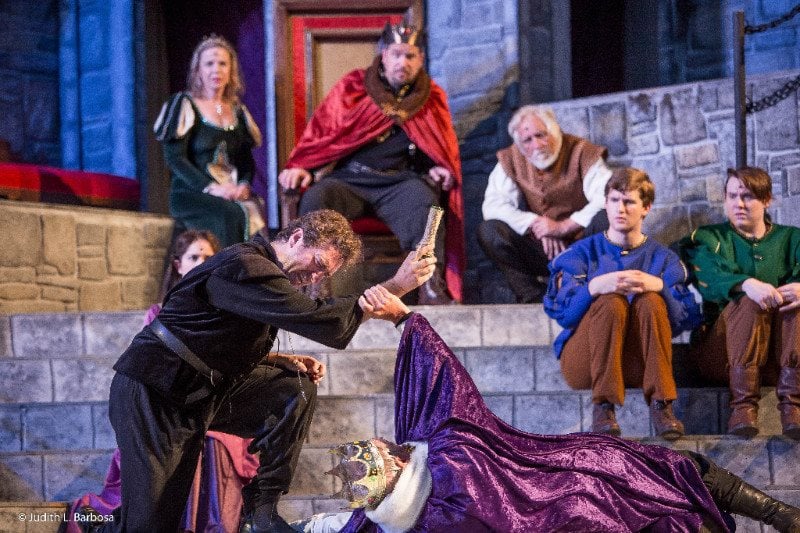
4
Hamlet is often read as a drama of psychological hesitation. A Marxist approach shifts the center of gravity. It reads the play not primarily as an interior tragedy but as a representation of power, legitimacy, ideology, and social transition. The question becomes not “Why does Hamlet delay?” but “What social contradictions does the play stage?”
Hamlet emerges at a historical moment when feudal monarchy, religious authority, and emerging state bureaucracy were in tension. The play dramatizes a political structure under strain. Its famous declaration—“Something is rotten in the state of Denmark”—is not metaphor alone. It is systemic.
I. The Political Structure: Legitimacy and Succession
At the center of the play lies a crisis of sovereignty.
King Hamlet is dead. Claudius occupies the throne through murder and rapid remarriage. The mechanisms of succession are ambiguous. There is no clear hereditary inevitability; election and consent appear implied.
This ambiguity reflects historical anxieties in late sixteenth-century England, where succession to the throne was politically unstable. The play stages a monarchy without secure legitimacy.
From a Marxist perspective:
• Claudius represents political pragmatism and realpolitik.
• Hamlet represents displaced aristocratic idealism.
• The court functions as apparatus of surveillance and control.
The state appears as ideological machine. Claudius governs through diplomacy, rhetoric, and manipulation rather than hereditary sanctity.
II. Ideology and Performance
Marxist criticism attends to ideology as a system that naturalizes power.
Claudius’s first speech exemplifies ideological management. He fuses mourning and celebration, transforming regicide into seamless continuity. Political language masks rupture.
The court accepts the new regime through ritual, ceremony, and language. Power consolidates itself through spectacle.
Hamlet’s problem is not only revenge; it is ideological dislocation. He perceives the falsity of official discourse. The world of Denmark is saturated with “seeming.”
Appearance versus reality becomes ideological critique. The state survives by managing representation.
III. Surveillance and State Apparatus
Elsinore is a space of constant observation.
• Polonius spies.
• Rosencrantz and Guildenstern serve as informants.
• Claudius monitors Hamlet.
This resembles what later Marxist thinkers call ideological state apparatuses—structures that regulate subjects through observation and discipline rather than overt violence.
Hamlet becomes a subject under scrutiny. His madness—feigned or real—becomes a strategy against surveillance, but also evidence of how the state intrudes upon private life.
The personal is political in Denmark.
IV. Class and the Graveyard Scene
The graveyard scene introduces class difference explicitly.
The gravediggers speak in prose, not verse. They discuss death casually, even humorously. Their material realism contrasts with aristocratic abstraction.
Here Marxist reading becomes acute:
• Death erases class hierarchy physically.
• Yet social inequality persists symbolically.
• Nobility is reduced to skull and bone.
Hamlet confronts the material equality of death. The skull of Yorick dissolves nostalgia and aristocratic identity.
The scene exposes the illusion of noble permanence. Feudal grandeur collapses before material reality.
V. Hamlet as Alienated Intellectual
Hamlet occupies a peculiar social position.
He is prince yet powerless. He is educated at Wittenberg—site associated with Protestant Reformation and intellectual transformation. He embodies emerging humanist consciousness.
In Marxist terms, Hamlet resembles the alienated intellectual:
• Aware of corruption
• Detached from practical political power
• Trapped between ideology and action
He critiques the state but cannot reorganize it. His delay reflects structural impotence of moral critique within corrupt system.
His introspection may be read as symptom of aristocratic crisis: the old order no longer secure, the new order not yet formed.
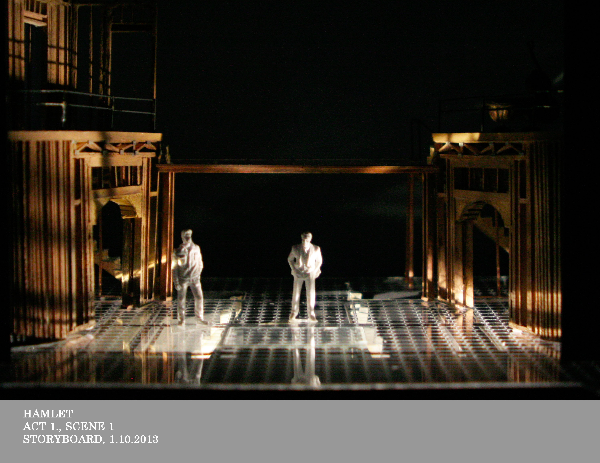
VI. Fortinbras and Historical Resolution
The play concludes with Fortinbras inheriting Denmark.
This resolution can be read politically:
• Internal feudal corruption gives way to external military consolidation.
• A more centralized authority replaces fractured monarchy.
The tragedy clears the old aristocratic order. Power transfers through force.
Marxist interpretation may see Fortinbras as representation of emergent political realism—less introspective, more pragmatic.
Hamlet dies without restoring the feudal ideal he mourned.
VII. Religion, Property, and Material Anxiety
The Ghost complicates ideological structure. It evokes purgatory—an idea under theological dispute during the Reformation.
Religious uncertainty intersects with property and inheritance. The father’s land, throne, and authority are at stake.
Revenge is not merely personal; it concerns control of state apparatus.
The play reveals how spiritual language masks material struggle.
VIII. Theatricality as Ideological Exposure
The play-within-the-play is often read psychologically. A Marxist lens emphasizes its political dimension.
Hamlet stages “The Mousetrap” to reveal hidden crime. Theatre becomes tool of ideological unmasking.
Art exposes power.
However, exposure does not immediately change political structure. Claudius’s guilt is visible, but he retains authority until violence erupts.
The scene dramatizes limits of critique within oppressive system.
IX. Marxist Contradictions Within the Text
A Marxist reading must also acknowledge tension:
• The play critiques monarchy but ultimately reinstates it (through Fortinbras).
• It exposes corruption yet does not imagine democratic alternative.
• It centers aristocratic figures while commoners remain peripheral.
Thus the play is both critical and conservative. It reveals structural rot but does not transcend monarchical framework.
This ambivalence reflects transitional historical moment.
X. Ideological Decay as Structural Motif
Rot imagery—disease, poison, decay—functions as metaphor for political corruption.
The poisoning of King Hamlet is not only crime; it is symbol of internal contamination of state.
The body politic is diseased.
Marxist criticism reads this not as abstract morality but as representation of system in crisis.
Conclusion
A Marxist reading of Hamlet reveals the tragedy as a drama of power, legitimacy, and ideological instability.
Hamlet’s hesitation is not solely psychological. It reflects:
• Crisis of succession
• Fractured sovereignty
• Surveillance state
• Alienated intellectual consciousness
• Transition from feudal idealism to political pragmatism
The play stages the disintegration of one order and the emergence of another. Personal tragedy becomes political symptom.
In this light, Hamlet is not merely existential drama. It is a representation of structural instability at the heart of early modern monarchy.
