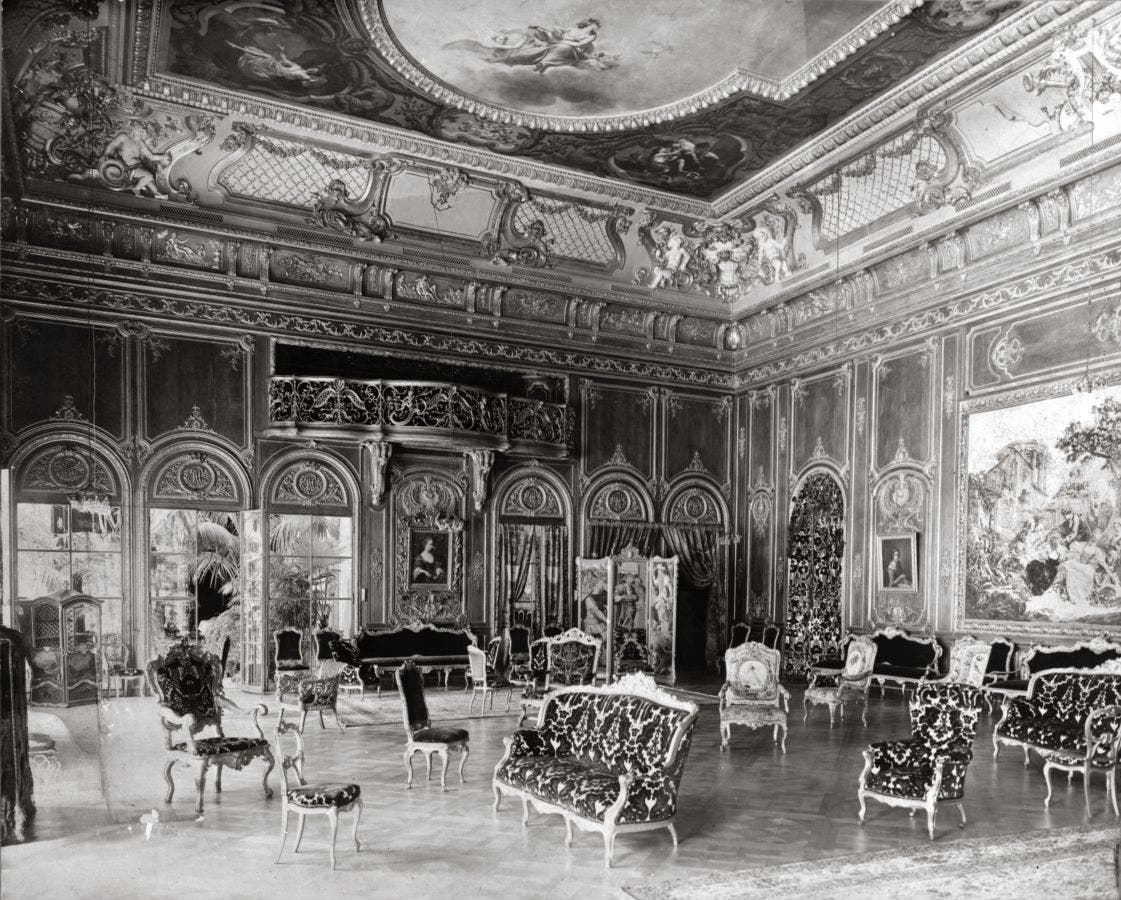
To enter American realism at the turn of the twentieth century is to encounter a literature deeply preoccupied with money, mobility, reputation, and the invisible codes governing social ascent. Among the most incisive works of this period is The House of Mirth by Edith Wharton. If French realism dissects romantic illusion and Russian realism embeds passion in historical breadth, American realism—particularly in Wharton’s hands—examines the machinery of social performance in a rapidly modernizing capitalist society.
The genre most suited to realism remains the social novel, and The House of Mirth exemplifies why. The narrative situates Lily Bart’s personal fate within the structures of Gilded Age New York: speculative finance, marriage markets, transatlantic leisure culture, gendered dependency, and the tyranny of reputation. Lily’s tragedy unfolds not through sensational catastrophe but through gradual economic and social displacement. Realism here becomes an anatomy of social survival.
What follows is a sustained realist reading that treats environment, economics, gender, psychology, and institutional power in depth.
I. American Realism: Money as Social Grammar
American realism at the fin de siècle emerges in a culture defined by industrial expansion, urban concentration, and new wealth. Unlike European aristocratic hierarchies, American elite society often rests on financial speculation and inheritance rather than lineage alone. Money functions as both economic resource and moral signifier.
Wharton’s realism refuses melodrama. She does not romanticize Lily’s beauty or demonize her rivals. Instead, she shows how capital circulates through drawing rooms and how social capital determines inclusion or exile. The novel opens not with grand event but with a chance meeting in Grand Central Station—an ordinary public space linking private desire to urban flux.
Realism in this American context means tracing how financial precarity shapes emotional life. Lily’s inability to secure stable marriage is not merely personal misjudgment; it is structural vulnerability of woman trained for luxury but denied independent income.
II. Narrative Overview: From Drawing Room to Boarding House
Lily Bart, nearing thirty and without fortune, belongs to New York’s elite circle but lacks secure economic foundation. Her beauty is her primary asset. She must marry wealth to maintain position.
Early in the novel, she contemplates marriage to Percy Gryce, a wealthy but dull bachelor. Yet she sabotages opportunity by indulging in social pleasures and flirtation with Lawrence Selden, a lawyer of modest means whose independence attracts her.
Her involvement with the married financier Gus Trenor leads to financial entanglement. Believing she is investing money through him, Lily later realizes she has been used and compromised. Rumors circulate, damaging her reputation.
Gradually, Lily loses invitations to country estates and European trips. She becomes socially marginal, dependent on distant acquaintances. Eventually she works briefly in millinery shop but lacks training for sustained labor. Debt accumulates.
The novel ends with Lily alone in modest boarding house, having taken sleeping draught that proves fatal. Her death remains ambiguous—accident or suicide. Meanwhile, Selden belatedly recognizes depth of his feeling.
The trajectory is downward yet incremental—precisely realist in pacing.
III. Gilded Age Society: Performance and Surveillance
Wharton depicts New York high society as theatre of constant observation. Dinners, opera boxes, country weekends—all function as stages where alliances are formed and reputations monitored.
Conversation is currency. A misplaced gesture or ambiguous association can precipitate exclusion. Lily’s beauty makes her spectacle; she is admired but scrutinized. Her financial insecurity intensifies vulnerability.
The social code is unwritten yet rigid. Marriage operates as economic transaction. Women without fortune must trade beauty for security; men without wealth lack entry into elite circles.
Realism manifests in this sociological precision. Wharton delineates hierarchy without overt polemic.
IV. Lily Bart: Aesthetic Consciousness and Economic Illiteracy
Lily’s tragedy arises partly from her aesthetic orientation. She perceives life as composition—she arranges herself like artwork, famously posing as Reynolds’s “Mrs. Lloyd” at tableau vivant. She understands visual effect but misjudges financial consequence.
Her interior life reveals oscillation between desire for luxury and longing for authentic connection. She admires Selden’s independence yet fears poverty. She dreams of moral freedom yet clings to material comfort.
Wharton renders Lily’s psychology through free indirect discourse, blending sympathy and irony. Readers witness her rationalizations and self-deceptions.
Realism insists that Lily is neither pure victim nor pure architect of downfall. She is product of training that valued charm over competence.
V. Lawrence Selden: Detached Observer
Selden functions as partial moral counterpoint. He speaks of “republic of the spirit,” valuing inner freedom over wealth. Yet he remains socially complicit—enjoying elite gatherings while critiquing them.
His indecision regarding Lily reflects his own ambivalence. He cannot fully commit to rescuing her from social peril; nor can he detach emotionally.
Wharton’s realism exposes limitations of liberal idealism within capitalist framework.
VI. Gus Trenor and Financial Exploitation
Trenor’s manipulation of Lily reveals gendered power embedded in finance. He allows her to believe she profits from investments; in fact, he expects sexual access in return.
The confrontation scene—where Trenor corners Lily in his home—exposes vulnerability of women dependent on male capital. Wharton does not sensationalize the episode; she presents it as plausible extension of economic imbalance.
Financial illiteracy becomes moral hazard.
VII. Bertha Dorset and Social Rivalry
Bertha Dorset exemplifies survivalist ruthlessness. She manipulates gossip to protect her own affair by implicating Lily. Reputation becomes weapon.
Wharton shows how elite society polices women more harshly than men. Bertha’s husband’s indiscretions are tolerated; Lily’s rumored impropriety leads to ostracism.
Realism here foregrounds asymmetry in moral judgment.
VIII. Work and Incompetence
When Lily attempts to support herself, she enters millinery workshop. The labor is repetitive, poorly paid, and demands skill she lacks. Wharton depicts this environment with concrete detail—sewing tasks, deadlines, exhaustion.
Lily’s inability to adapt underscores class conditioning. She has been trained for leisure consumption, not productive labor.
Realism insists that economic structure shapes capability.
IX. Debt, Bills, and the Tyranny of Paper
Financial documents recur throughout novel—notes, checks, debts owed to Lheureux-like figures (in American variant). The accumulation of unpaid bills becomes silent pressure.
Wharton integrates numbers and deadlines into narrative. Material causality drives plot.
X. Death as Social Silence
Lily’s death lacks theatrical grandeur. She consumes chloral hydrate in boarding room. The scene is quiet, almost muted. Wharton refrains from explicit declaration of suicide.
Selden’s discovery of her body underscores belated recognition. Society continues its cycles; gossip fades.
Realism avoids operatic climax.
XI. Gender and Property Law
Women in the novel possess limited economic agency. Marriage transfers wealth; single women rely on inheritance or labor.
Lily’s precarious status arises from absence of dowry. Her beauty substitutes temporarily but cannot sustain long-term security.
Realism exposes structural inequity rather than framing tragedy as purely emotional.
XII. Realism versus Romanticism
Unlike romantic tragedy, Lily’s fate results from cumulative miscalculations within social matrix. There is no heroic defiance; there is gradual narrowing of options.
Wharton’s style remains restrained, analytic, observational.
XIII. Conclusion
A realist reading of The House of Mirth reveals American society as network of wealth, surveillance, and gendered dependency. Lily Bart’s tragedy unfolds through incremental loss—of invitations, credit, reputation, hope. Wharton’s social novel renders the Gilded Age not as glittering spectacle but as economic system regulating intimacy.
American realism, in Wharton’s hands, becomes examination of capitalism’s subtle cruelty—how beauty without money becomes liability, how freedom without resources proves illusory.
📊 Summary Table: Realist Reading of The House of Mirth
| 🟦 Category | 🟩 Realist Principle | 🟨 Textual Illustration | 🟥 Critical Insight |
|---|---|---|---|
| 💰 Economy | Material causality | Lily’s debts & investments | Finance shapes fate |
| 🏘 Society | Surveillance network | Gossip & exclusion | Reputation governs survival |
| 💍 Marriage | Market logic | Gryce courtship | Union as transaction |
| 👩 Gender | Economic dependency | Lack of dowry | Structural vulnerability |
| 🧠 Psychology | Gradual disillusionment | Lily’s reflections | Desire constrained by reality |
| 🏢 Labor | Class conditioning | Millinery work | Incompetence socially produced |
| ⚖ Morality | Double standard | Bertha vs Lily | Women judged harshly |
| 💊 Death | Anti-romantic ending | Chloral overdose | Tragedy understated |
| 📌 Genre | Social novel | Multi-setting scope | Breadth enables realism |