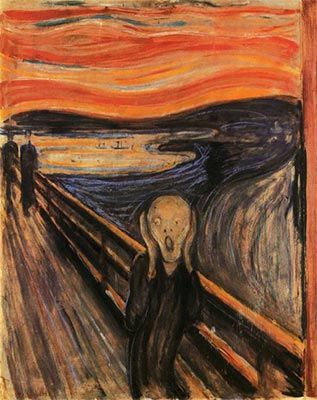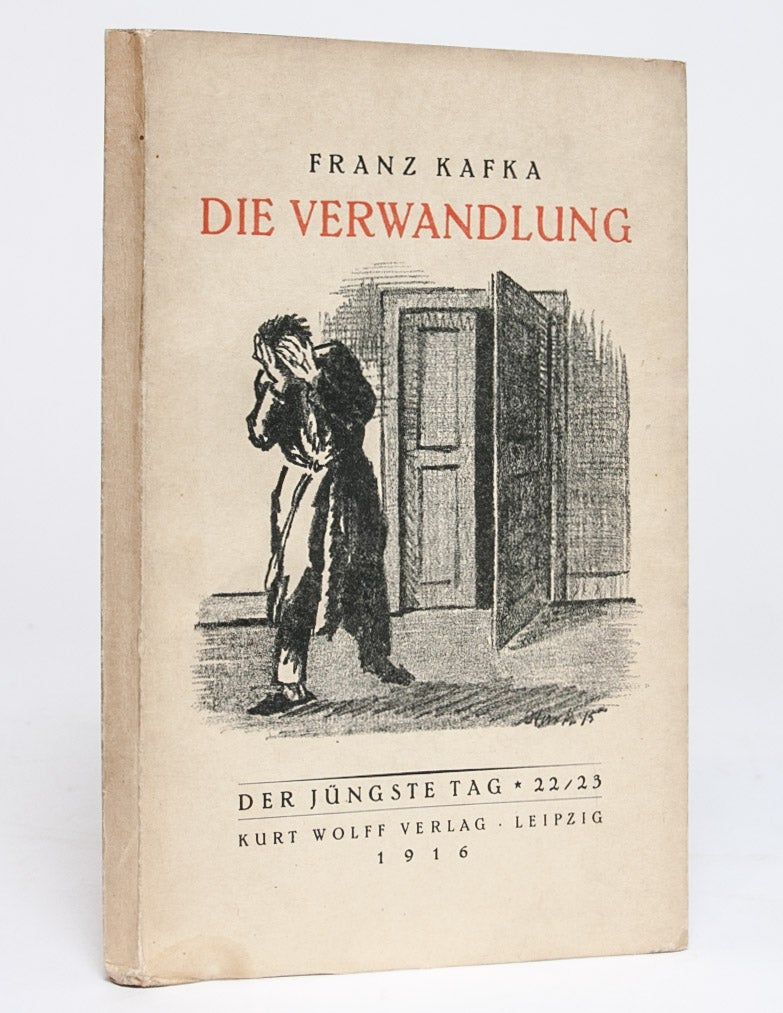
An expressionist reading of The Metamorphosis by Franz Kafka foregrounds distortion, alienation, grotesque embodiment, and the projection of psychic crisis into material form. If expressionism seeks to render interior anguish visible through exaggeration and deformation, Kafka’s novella stands as one of its most paradigmatic prose realizations. Reality is not mimetically represented; it is intensified to reveal existential truth.
The central event—Gregor Samsa’s transformation into a monstrous insect—is not explained biologically, psychologically, or metaphysically. Its impossibility signals a shift from realism to expressionist allegory. The grotesque metamorphosis externalizes the dehumanization already latent in Gregor’s life as a traveling salesman trapped in debt, familial obligation, and mechanical routine. The novella dramatizes the modern subject’s reduction to function within industrial capitalism.
I. Integrated Summary of the Text
The narrative opens with the iconic sentence: Gregor Samsa awakens from uneasy dreams to find himself transformed into a giant insect. His first concern, however, is not existential horror but practical inconvenience—he will miss the train to work.
Gregor works as a traveling salesman to repay his parents’ debts. His labor sustains the family. Despite physical transformation, he worries about employer reaction and family finances. When his office manager arrives to investigate his absence, Gregor attempts to communicate but produces only incomprehensible sounds. His family recoils in horror upon seeing him.
As days pass, Gregor becomes confined to his bedroom. His sister Grete initially cares for him, bringing food and cleaning his space. Over time, her compassion erodes. The family takes on employment; the father becomes aggressive and hostile. In a violent episode, he pelts Gregor with apples—one lodging in his back, causing lasting injury.
The apartment atmosphere grows tense and claustrophobic. Lodgers are taken in to generate income. Gregor listens secretly as Grete plays violin, experiencing fleeting aesthetic yearning. Yet when he emerges from his room, the lodgers react with disgust.
Eventually, Grete declares that the family must rid themselves of Gregor. Isolated and weakened, Gregor retreats and dies quietly overnight. The family experiences relief rather than grief. They leave the apartment, planning a more hopeful future.
II. The Grotesque Body as Expressionist Device
Expressionism frequently magnifies inner suffering through physical distortion. Gregor’s transformation literalizes alienation. He is not metaphorically treated like vermin; he becomes vermin.
The grotesque insect body reflects how Gregor has already been reduced to economic instrument. His labor identity supersedes individuality. The metamorphosis makes visible the dehumanization inherent in modern bureaucratic capitalism.
Kafka does not provide descriptive naturalism of insect physiology; instead, the body functions symbolically. Its awkward limbs and immobility mirror psychological entrapment.
III. Alienation and Mechanized Labor
Gregor’s occupation as salesman embodies modern alienation. He travels incessantly, lacks intimate relationships, and experiences work as coercive necessity. He expresses resentment toward his employer’s surveillance and distrust.
The transformation interrupts this mechanical routine, yet Gregor’s internalized discipline persists. Even in monstrous form, he calculates train schedules.
Expressionism externalizes this alienation. The family apartment becomes microcosm of industrial society—hierarchical, economically strained, emotionally fragmented.
IV. Family as Oppressive Structure
Unlike sentimental domestic fiction, Kafka portrays family as conditional support system dependent on economic utility. When Gregor provides income, he is tolerated; once incapacitated, he becomes burden.
The father’s authoritarian posture intensifies. Uniformed in bank porter attire, he embodies restored patriarchal authority. His aggression against Gregor symbolizes violent rejection of non-productive body.
Grete’s evolution from caregiver to advocate of expulsion underscores shifting familial economy. Compassion proves contingent upon utility.
Expressionism often depicts generational conflict and domestic claustrophobia. Here, the apartment’s confined architecture reflects suffocation of subjectivity.
V. Space and Claustrophobia
The novella’s spatial design is tightly compressed. Gregor’s bedroom becomes cell. Doors operate symbolically—thresholds between visibility and exclusion. When doors open, horror erupts; when closed, silence suffocates.
The apartment layout amplifies expressionist atmosphere. Interior space dominates narrative; external world remains abstract. The confinement mirrors Gregor’s psychological isolation.
VI. Language and Communication Breakdown
Expressionism destabilizes communication. Gregor understands others but cannot make himself understood. His speech transforms into unintelligible sound.
Language becomes barrier rather than bridge. This communicative rupture intensifies alienation. The family interprets Gregor’s silence as hostility or menace.
The failure of language underscores modern subject’s disconnection within rationalized society.
VII. Music and Transcendent Longing
The violin scene introduces aesthetic dimension. Gregor feels drawn to Grete’s music, imagining sending her to conservatory. This fleeting aspiration signals residual humanity.
Expressionism frequently juxtaposes spiritual longing against material oppression. Yet transcendence remains unrealized. Gregor’s emergence into living room results in renewed rejection.
Art offers momentary illumination but no salvation.
VIII. Institutional Absence and Existential Vacuum
Unlike The Trial, where bureaucracy dominates, The Metamorphosis internalizes institutional violence within family unit. There is no court, no legal process—only economic logic.
Gregor’s condition receives no medical or religious intervention. Society remains absent. The transformation is accepted as absurd fact. Expressionism thrives in such ontological instability.
IX. Death as Quiet Erasure
Gregor’s death occurs without spectacle. He starves gradually, internalizing family’s desire for disappearance. His final act—retreating voluntarily—suggests absorption of guilt.
The family’s relief highlights utilitarian morality. Once burden is removed, optimism returns. Grete stretches her body in tramcar sunlight, symbolizing renewal grounded in economic viability.
Expressionism often concludes with annihilation of isolated subject, leaving social structure intact.
X. Expressionism versus Realism
A realist narrative would explain metamorphosis through psychological trauma or scientific anomaly. Kafka refuses such causality. The absurd premise is presented with bureaucratic calm, intensifying estrangement.
The novella exemplifies expressionist aesthetics through:
- Physical deformation
- Symbolic architecture
- Heightened alienation
- Emotional extremity rendered matter-of-factly
Reality becomes projection of existential crisis.
XI. Modernity and Dehumanization
Kafka anticipates twentieth-century anxieties about mechanization and commodification. Gregor’s insect body embodies surplus humanity rendered obsolete.
The novella’s enduring resonance lies in its articulation of modern subject as replaceable component within economic system.
XII. Conclusion
An expressionist reading of The Metamorphosis reveals the grotesque transformation as externalization of dehumanized modern existence. Gregor’s body dramatizes alienation; the apartment compresses psychological suffocation; language collapses; familial love proves conditional.
Kafka’s achievement lies in rendering subjective crisis through distorted objective reality. The novella stands as canonical prose expressionism—where the impossible is treated as ordinary, and the ordinary becomes unbearable.
🎨 Summary Table: Expressionist Reading of The Metamorphosis
| 🟦 Category | 🟩 Expressionist Principle | 🟨 Textual Manifestation | 🟥 Critical Insight |
|---|---|---|---|
| 🪳 Grotesque Body | Physical distortion externalizes psyche | Gregor becomes insect | Dehumanization made visible |
| 🏢 Labor Alienation | Mechanized existence | Traveling salesman routine | Identity reduced to economic function |
| 👨👩👧 Family Structure | Conditional belonging | Rejection after incapacity | Utility replaces affection |
| 🚪 Space | Claustrophobic interiors | Bedroom confinement | Environment mirrors isolation |
| 💬 Language Breakdown | Communication collapse | Incomprehensible speech | Modern subject silenced |
| 🎻 Aesthetic Longing | Spiritual aspiration | Violin scene | Art offers fleeting transcendence |
| ⚖️ Authority | Domestic authoritarianism | Father’s aggression | Power asserts productivity norm |
| ⚰ Death | Anti-redemptive closure | Gregor’s quiet demise | Social order persists unchanged |
| 📌 Overall Vision | World as projection of alienated consciousness | Grotesque realism | Expressionism reveals inner crisis |