The Awakening
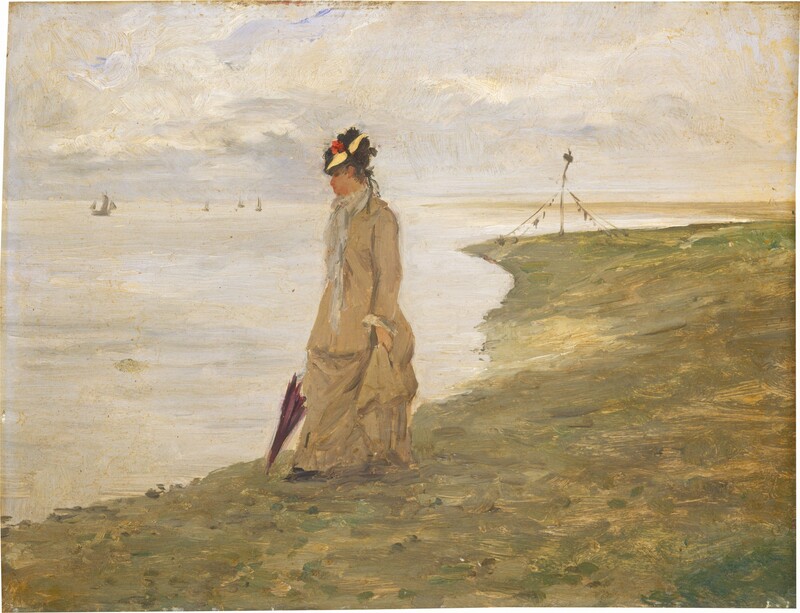
When The Awakening was published in 1899, it was scandalous not because it depicted cruelty, but because it depicted female desire without punishment through moral repentance. Edna Pontellier’s transgression is not adultery alone; it is the insistence that her interior life—her erotic, artistic, and existential longings—cannot be reduced to wifehood and motherhood. The novel has since become foundational to feminist literary criticism because it dramatizes the contradictions of bourgeois liberal freedom: a woman may awaken to desire, but the social world may offer no viable structure within which that awakening can be lived.
Feminist readings of Chopin’s novel have moved from early liberal celebration (“Edna as proto-feminist heroine”) to more complex analyses that interrogate class, race, and the ideological limits of autonomy. The text becomes a laboratory for examining how gender, property, sexuality, and domestic ideology interlock.
This essay offers a sustained feminist reading of The Awakening across five dimensions: (1) marriage as legal-economic structure, (2) motherhood and the ideology of “true womanhood,” (3) erotic desire as epistemological rupture, (4) art and self-creation, and (5) the sea and suicide as ambiguous feminist gesture.
1. Marriage as Structure, Not Romance
Edna’s marriage to Léonce Pontellier is not represented as overtly abusive. This is crucial. Léonce is conventional, attentive to appearances, concerned with propriety and status. He treats Edna as possession—not violently, but administratively. He worries about her social behavior because it reflects on him. His irritation when she neglects visiting duties or domestic rituals reveals that marriage in this bourgeois Creole world is less emotional union than economic and reputational arrangement.
From a materialist feminist perspective, marriage in the novel is a legal-economic contract in which the wife’s identity is subsumed under the husband’s. Edna’s property, movements, and even social gestures are implicitly governed by her role as Mrs. Pontellier. The novel subtly dramatizes coverture—the legal doctrine under which a married woman’s legal identity was absorbed into her husband’s.
Edna’s awakening therefore begins not with erotic infatuation, but with the perception that her marriage is structurally constraining. Her dissatisfaction is not merely romantic boredom; it is ontological dissonance between selfhood and role.
2. Motherhood and the “Mother-Woman”
Chopin introduces the figure of the “mother-woman” through Adèle Ratignolle. Adèle embodies Victorian ideals of self-sacrificing maternity: radiant, fertile, devoted, emotionally expressive. She is admired socially because she conforms perfectly to maternal ideology.
Edna, by contrast, confesses that while she loves her children, she would give up her life for them—but not herself. This distinction is philosophically explosive. It separates biological affection from existential surrender. Edna refuses to dissolve her identity into maternal function.
Feminist criticism has often read this as radical critique of domestic ideology. However, the novel complicates this reading by showing the emotional cost of Edna’s stance. Her children are not villains; they are attachments. The tension lies in the incompatibility between maternal devotion as socially defined and female individuality as experientially felt.
Thus, the novel forces feminist theory to confront a persistent question: Can bourgeois motherhood coexist with autonomous subjectivity? Chopin’s answer appears bleak.
3. Erotic Desire as Awakening
Edna’s sensual awakening begins in Grand Isle, in an atmosphere of sea air and leisure. Her attraction to Robert Lebrun is less consummated romance than catalyst. Desire becomes epistemological event: it reveals to her that she possesses interior life independent of social expectation.
Unlike adulterous heroines in earlier fiction (e.g., Madame Bovary), Edna’s desire is not depicted as moral corruption but as awakening of self-awareness. She experiences her body not as decorative object but as locus of sensation and will.
From a feminist theoretical perspective, this is crucial. Patriarchal culture often defines female sexuality as passive or reactive. Edna’s desire, by contrast, is active and exploratory. Her relationship with Alcée Arobin further disrupts romantic idealism. Sexual pleasure is separated from sentimental narrative.
However, Chopin does not romanticize this liberation. Desire destabilizes Edna’s social standing and emotional equilibrium. The novel suggests that erotic autonomy, while exhilarating, is socially uninhabitable in her context.
4. Art and Self-Creation
Parallel to sexual awakening is artistic awakening. Edna begins to paint seriously. Art becomes alternative to domestic performance. Through painting, she attempts to materialize interior vision.
This is significant within gynocritical frameworks: women’s artistic production often emerges as resistance to domestic enclosure. Yet Edna’s art remains economically fragile. She briefly supports herself by selling paintings, but the sustainability of artistic independence remains doubtful.
Her move to the “pigeon house” is symbolically potent: a smaller space, chosen by her, separate from husband’s mansion. Yet the house is economically enabled by her husband’s wealth. Autonomy remains parasitic on patriarchy.
Thus, the novel dramatizes the structural difficulty of female artistic independence in bourgeois society.
5. The Sea: Semiotic Space or Nihilistic Escape?
The sea is the novel’s most resonant symbol. It first appears as site of sensual awakening—Edna learns to swim, an act that produces exhilaration and fear. The sea calls to her as space beyond social surveillance.
Feminist critics have read the sea variously:
- As return to pre-social, fluid self (a Kristevan semiotic space).
- As symbolic rebirth into autonomous being.
- As annihilation of constrained identity.
In the final scene, Edna walks into the sea. The act is often interpreted as tragic suicide—a surrender. Yet it can also be read as refusal to return to domestic imprisonment.
The ambiguity is deliberate. Chopin refuses to supply moral commentary. The sea becomes both liberation and extinction. It is freedom from social constraint—but also from social existence.
From feminist standpoint, the ending exposes the limit of liberal individualism. Edna cannot imagine a collective feminist alternative. There is no community of resistant women to sustain her. Without structural change, personal awakening collapses into solitude.
6. Race, Class, and Silent Foundations
A deeper feminist reading must also account for the novel’s racial and class context. The Creole society depicted rests on racial hierarchy. Black domestic servants appear peripherally but enable bourgeois leisure. Edna’s autonomy is cushioned by unacknowledged labor.
Thus, as with Jane Eyre, feminist awakening is entangled with structural inequality. Edna’s rebellion remains confined within her class world.
Intersectional feminist critique would argue that Chopin’s focus on white bourgeois dissatisfaction risks universalizing a specific demographic experience.
Feminist Synthesis Table: The Awakening
| Feminist Axis | What the Novel Shows | Critical Consequence |
|---|---|---|
| Marriage | Legal-economic containment | Romance masks contract |
| Motherhood | Ideological self-sacrifice vs autonomy | Maternal identity destabilized |
| Desire | Female sexuality as active consciousness | Erotic awakening as epistemological rupture |
| Art | Creative self beyond domesticity | Fragile economic independence |
| Sea | Fluid freedom & annihilation | Autonomy without structure collapses |
| Class/Race | Bourgeois leisure underwritten by hierarchy | Awakening is socially situated |
Conclusion
The Awakening remains central to feminist literary criticism because it stages the crisis of female subjectivity within bourgeois patriarchy. It neither offers triumphant emancipation nor condemns desire. Instead, it dramatizes the structural impasse between selfhood and social role.
Chopin’s novel exposes a haunting truth: awakening alone is insufficient. Without transformation of economic, legal, and communal structures, female autonomy risks becoming solitary exile.