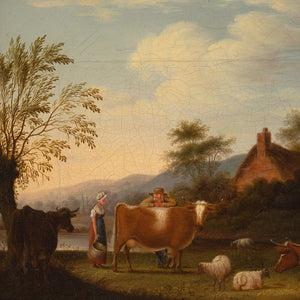
A rigorous naturalist reading of Tess of the d’Urbervilles by Thomas Hardy situates the novel within a deterministic framework shaped by heredity, environment, sexuality, and impersonal social law. Although Hardy is often classified as a tragic realist, Tess operates profoundly within naturalist epistemology. Its subtitle—“A Pure Woman Faithfully Presented”—already signals resistance to moral absolutism. Hardy dismantles Victorian ethical structures and instead presents Tess Durbeyfield as organism subjected to biological impulse, socio-economic constraint, and historical transition.
Naturalism in Hardy differs tonally from the urban industrial determinism of Émile Zola, yet its philosophical grounding is comparable: individuals exist within causal networks they neither design nor control. Fate in Tess is not metaphysical destiny but convergence of heredity, accident, sexual instinct, and rigid social codes. Hardy’s Wessex is both pastoral and mechanistic; beneath its lyrical surface lies deterministic machinery.
I. Heredity and Ancestral Illusion
Naturalism foregrounds heredity as structuring force. Tess’s family history begins with ironic discovery of aristocratic lineage—the d’Urbervilles. Yet this ancestry functions not as empowerment but as trap. The revelation triggers economic aspiration and social displacement. The Durbeyfields’ pride in ancient blood contrasts sharply with their contemporary poverty.
Hardy employs heredity ironically. The aristocratic name does not guarantee status; instead, it precipitates Tess’s exposure to Alec d’Urberville. Biological and social inheritance converge disastrously. Tess’s beauty—often emphasized in physical description—becomes evolutionary asset and vulnerability simultaneously. It attracts desire within patriarchal system that commodifies female sexuality.
Heredity in the novel operates less as genetic determinism than as historical residue shaping opportunity and expectation. Tess inherits not wealth but symbolic burden.
II. Milieu: Rural Economy and Industrial Transition
Hardy’s Wessex countryside is frequently romanticized, yet from naturalist perspective it constitutes economic milieu under transformation. Agricultural mechanization displaces labor; seasonal employment generates instability. Tess’s family depends on precarious wages; poverty drives her to seek assistance from the wealthy d’Urbervilles.
Environment shapes behavior. The dairy at Talbothays provides temporary equilibrium—abundance, pastoral harmony, communal labor. Yet this environment proves transient. Flintcomb-Ash, by contrast, represents harsh industrial agriculture: mechanized threshing machines, relentless labor, barren landscape. The shift between these milieus demonstrates environmental determinism.
Hardy repeatedly emphasizes weather and season. Rain, frost, sun operate not symbolically alone but materially. Tess works under oppressive conditions that erode physical strength. Nature is not benevolent; it is indifferent.
III. Sexuality as Biological Force
Naturalism reconceives sexuality as instinctual energy rather than moral transgression. Tess’s encounter with Alec remains deliberately ambiguous, yet its aftermath reveals rigid social condemnation. Hardy refuses to label Tess impure. The social order imposes stigma; biology does not.
Angel Clare’s idealization of Tess as pastoral innocence reflects romantic projection rather than reality. When Tess confesses her past, Angel’s rejection exposes tension between biological fact and cultural purity myth. His moral rigidity contrasts with naturalist recognition of sexuality as natural phenomenon.
Tess’s maternal bond with her child, Sorrow, illustrates bodily continuity beyond social legitimacy. The child’s death underscores environmental vulnerability; poverty and isolation amplify tragedy.
IV. Social Law and Structural Constraint
Victorian morality operates as impersonal force within the novel. Tess’s fall results less from individual sin than from patriarchal double standards. Alec’s predation incurs minimal consequence; Tess bears social burden.
Marriage functions as economic contract. Angel’s idealism collapses when confronted with Tess’s sexual history. His departure reveals how ideology shapes relational outcomes.
Naturalism exposes moral law as socially constructed mechanism reinforcing power hierarchy. Tess’s suffering emerges from collision between instinctual life and rigid code.
V. Chance and Contingency
Hardy integrates coincidence within deterministic pattern. Tess’s letter confession slips under carpet and goes unread. Angel encounters Tess too late to prevent catastrophe. Such contingencies intensify tragedy.
Yet chance operates within structural inevitability. Tess’s vulnerability stems from poverty and gender hierarchy; coincidence accelerates but does not originate downfall. Naturalism acknowledges randomness while maintaining causal coherence.
VI. The Body under Labor and Surveillance
Hardy persistently foregrounds Tess’s physicality—her hands, gait, exhaustion. Labor shapes bodily endurance. Sexual violation, childbirth, fieldwork inscribe history upon flesh.
At Flintcomb-Ash, mechanized agriculture reduces workers to appendages of machine. Tess’s physical suffering parallels industrial encroachment. The threshing machine’s rhythm evokes mechanical determinism reminiscent of continental naturalism.
VII. Nature’s Indifference and the Myth of Pastoral Consolation
Though Hardy’s prose often evokes lyrical beauty, nature remains indifferent to human aspiration. The Stonehenge scene epitomizes this indifference. Tess rests upon ancient monolith; dawn arrives; authorities capture her. Prehistoric stones symbolize continuity of time dwarfing individual life.
Nature neither rescues nor condemns. It witnesses.
VIII. Angel Clare: Ideology versus Biology
Angel embodies intellectual idealism. His rejection of Tess reveals conflict between abstract morality and embodied reality. Naturalism critiques such abstraction. Angel’s later remorse illustrates delayed adaptation; he must reconcile ideology with lived complexity.
Yet his transformation arrives too late. Structural forces have advanced beyond redemption.
IX. Alec d’Urberville: Predator within Social Ecology
Alec functions as sexual predator enabled by wealth. His pursuit of Tess exemplifies power dynamics embedded within social structure. Naturalism avoids demonization; Alec operates within patriarchal ecology that rewards dominance.
Even his later conversion to evangelical fervor appears environmental response rather than spiritual awakening. Determinism pervades.
X. Execution and Inevitable Closure
Tess’s execution concludes narrative without moral triumph. Hardy refuses melodramatic rescue. The black flag at prison signals systemic finality. Society eliminates what it has already marginalized.
From naturalist perspective, Tess’s death results from cumulative pressures: poverty, gender constraint, sexual vulnerability, rigid morality, chance events. Fate equals convergence of forces.
XI. Determinism and Residual Tragic Consciousness
Hardy blends naturalist determinism with classical tragic resonance. Tess evokes sympathy not because she defies law but because she exemplifies organism crushed by structure. Tragedy arises from disproportion between human sensitivity and impersonal mechanism.
Naturalism here intersects with fatalism but remains grounded in material causation rather than divine decree.
XII. Conclusion
A naturalist reading of Tess of the d’Urbervilles reveals narrative governed by heredity, environment, sexuality, economic instability, and rigid social law. Tess’s downfall is not moral failure but structural inevitability produced by intersecting forces. Hardy dismantles Victorian idealism and situates individual within deterministic network of history and biology.
Wessex’s pastoral surface conceals mechanistic undercurrent. Nature remains indifferent; society enforces arbitrary codes; sexuality functions as biological impulse; chance accelerates tragedy. Tess emerges as emblem of organism navigating hostile ecology.
In this synthesis of lyricism and determinism, Hardy crafts one of the most profound naturalist tragedies in English literature.
Summary Table: Naturalist Reading of Tess of the d’Urbervilles
| Analytical Category | Naturalist Principle | Textual Manifestation | Critical Implication |
|---|---|---|---|
| Philosophical Basis | Determinism & material causation | Tess shaped by poverty and gender | Fate as convergence of forces |
| Heredity | Ancestral legacy as burden | d’Urberville lineage irony | Inheritance produces vulnerability |
| Milieu (Rural Economy) | Environment conditions survival | Agricultural labor & mechanization | Economic instability drives action |
| Sexual Instinct | Biology precedes morality | Alec–Tess encounter | Sexuality naturalized, stigma social |
| Social Law | Moral codes as structural force | Angel’s rejection | Patriarchy reinforces determinism |
| Chance | Contingency within structure | Lost confession letter | Randomness intensifies inevitability |
| The Body | Physical labor & suffering | Flintcomb-Ash hardship | Identity inscribed through labor |
| Nature’s Indifference | Non-anthropocentric universe | Stonehenge arrest scene | Human life dwarfed by time |
| Industrial Mechanism | Human reduced to machine appendage | Threshing machine imagery | Rural naturalism meets industrial determinism |
| Predatory Ecology | Power hierarchies shape behavior | Alec’s dominance | Social Darwinist undertones |
| Closure | Non-redemptive ending | Tess’s execution | Society enforces systemic order |
| Overall Vision | Individual crushed by structural forces | Tess as tragic organism | Naturalism fuses lyricism with determinism |