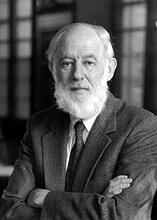
Among the figures grouped under American deconstruction, Geoffrey Hartman occupies the most elusive and, in many respects, the most humane position. If Paul de Man represents the epistemological severity of deconstruction and J. Hillis Miller its narratological unfolding, Hartman represents its hermeneutic and ethical inflection. His work does not dismantle texts with analytic austerity; rather, it dwells within their indeterminacy, cultivating a form of criticism that is at once deconstructive and restorative.
Hartman’s deconstruction is deeply shaped by Romanticism—especially Wordsworth—and by a lifelong concern with the act of reading itself. His central insight is that textual indeterminacy does not signal collapse but generates commentary. Meaning proliferates not because texts fail, but because they exceed any single interpretive act.
This essay examines Hartman’s intellectual trajectory, theoretical commitments, and exemplary readings—particularly of Wordsworth—in order to clarify his distinct contribution to deconstructive criticism.
Intellectual Formation and Theoretical Orientation
Born in 1929 in Germany and later emigrating to the United States, Geoffrey Hartman’s early intellectual formation was shaped by philology, German Romanticism, and Jewish thought. He became a central member of the Yale School alongside de Man and Miller, yet his sensibility remained distinct.
Hartman’s major works include:
- Beyond Formalism (1970)
- The Fate of Reading (1975)
- Criticism in the Wilderness (1980)
While influenced by Derrida, Hartman resists the reduction of deconstruction to epistemological negation. His work often defends the autonomy and dignity of literature against reductive theoretical mastery.
Where de Man exposes blindness, Hartman emphasizes the generative dimension of indeterminacy.
Romanticism and the Mediation of Presence
Hartman’s most sustained engagement is with Wordsworth. Romantic poetry appears to promise transcendental immediacy—a unity between self and nature. Yet Hartman shows that such immediacy is always mediated by memory, language, and reflection.
In readings of Tintern Abbey, Hartman demonstrates that presence is inseparable from belatedness. The poet returns to the Wye valley after five years; the present encounter is layered with recollection. The poem gestures toward unity but sustains it only through interpretive reconstruction.
Unlike de Man, Hartman does not treat this mediation as exposure of failure. Instead, he treats it as condition of poetic vitality. The poem survives because it cannot fix its meaning.
Indeterminacy as Generative
A crucial distinction between Hartman and de Man lies in their treatment of indeterminacy.
For de Man, rhetorical instability reveals the impossibility of epistemological grounding. For Hartman, indeterminacy generates interpretive energy. The text becomes inexhaustible.
Hartman frequently returns to the notion that commentary is intrinsic to literature. A great poem demands rereading. Its openness invites successive acts of interpretation.
Thus, indeterminacy is not collapse but productivity.
Commentary and the “Fate of Reading”
In The Fate of Reading, Hartman explores the tension between text and commentary. Criticism risks overshadowing literature, yet it is also necessary. Hartman’s solution is not to subordinate criticism but to recognize it as extension of literary experience.
Reading becomes ethical relation. The critic must respect textual alterity rather than impose theoretical closure.
This ethical orientation distinguishes Hartman from both de Man and Miller. Where de Man is analytically severe and Miller narratively expansive, Hartman is hermeneutically reflective.
Belatedness and the Divided Self
In Wordsworth’s poetry, Hartman identifies a recurrent pattern: the present self interpreting a past self. This temporal division produces layered consciousness.
For example, in Ode: Intimations of Immortality, childhood appears as lost origin. The adult speaker reconstructs that origin through memory. Hartman reads this not as failed transcendence but as poetic acknowledgment of mediation.
Selfhood becomes interpretive process rather than stable identity.
Language and the Wilderness of Criticism
In Criticism in the Wilderness, Hartman confronts the anxiety that criticism may overwhelm literature. He argues that literary language itself invites commentary because it resists paraphrase.
Romantic lyric, with its abstraction and figural density, demands interpretation. Criticism becomes secondary creation.
Hartman’s deconstruction therefore preserves literary dignity while acknowledging instability.
Comparison with De Man and Miller
Hartman’s differences from his Yale colleagues clarify his contribution:
- He shares de Man’s attention to rhetoric but resists reducing indeterminacy to epistemological impossibility.
- He shares Miller’s concern with textual unfolding but emphasizes lyric rather than narrative.
- He foregrounds the ethics of reading rather than the impossibility of meaning.
Hartman tempers deconstruction with attentiveness to literary value.
The Ethical Dimension
Hartman’s later work, especially after the controversies surrounding de Man’s biography, increasingly emphasizes ethical responsibility. Deconstruction must not become nihilism.
Reading requires humility. The text exceeds mastery; the critic must respond rather than dominate.
This ethical emphasis ensures that Hartman’s deconstruction remains dialogical rather than adversarial.
Hartman’s Contribution
Geoffrey Hartman’s deconstructive approach may be summarized as follows:
- Romantic poetry reveals mediation rather than pure presence.
- Indeterminacy sustains commentary.
- Reading is ethical engagement.
- Criticism extends rather than replaces literature.
His work preserves deconstruction’s insight into instability while safeguarding literature’s vitality.
Conceptual Summary Table
| Theoretical Axis | Hartman’s Position | Literary Implication |
|---|---|---|
| Romantic Presence | Always mediated | Unity textualized |
| Indeterminacy | Generative, not nihilistic | Text invites rereading |
| Commentary | Intrinsic to literature | Criticism as extension |
| Belatedness | Structural condition | Self divided temporally |
| Ethics of Reading | Responsiveness over mastery | Interpretation as dialogue |
| Critical Tone | Reflective, humane | Deconstruction with restraint |
Concluding Perspective
Geoffrey Hartman completes the triad of American deconstruction. Where de Man exposes rhetorical impossibility and Miller traces narrative self-undoing, Hartman cultivates interpretive openness. His deconstruction is less about dismantling than about sustaining the life of reading.
Together, de Man, Miller, and Hartman reveal that American deconstruction is not uniform doctrine but constellation of approaches united by attentiveness to textual instability.