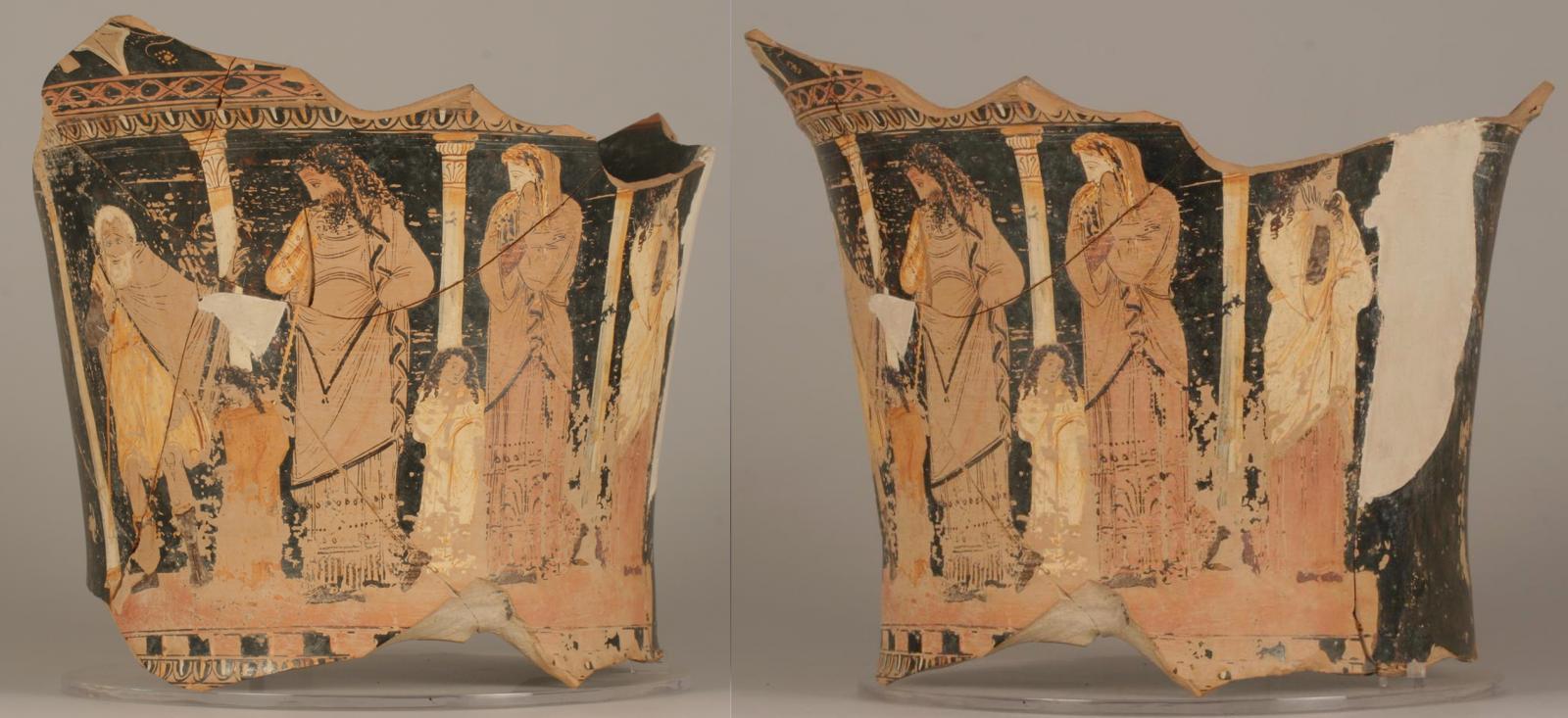
Oedipus Rex

Structuralism shifts critical attention from thematic interpretation or authorial psychology to the underlying systems that generate meaning. A structuralist reading of Oedipus Rex does not ask whether Oedipus is morally guilty, psychologically conflicted, or politically tragic. Instead, it asks: What system of relations makes this story intelligible? What oppositions organize its logic? How does the myth function as part of a larger semiotic structure?
This essay reads Oedipus Rex through Saussurean linguistics and Lévi-Straussian myth analysis, arguing that the tragedy operates as a structured system of binary oppositions—nature/culture, knowledge/ignorance, sight/blindness, kinship/disruption—that collectively mediate a central contradiction concerning origins and identity. The play’s power lies not in isolated dramatic moments but in its deep relational architecture.
I. Saussurean Foundations: Meaning as Difference
Structuralism begins with Ferdinand de Saussure’s proposition that language is a system of differences without positive terms. A sign does not carry intrinsic meaning; it acquires meaning through relational opposition within a system. Structure precedes individual utterance.
Applied to myth, this means that the Oedipus story is not meaningful because of Oedipus’s personality but because of the network of relations that organize the narrative. Each character and event occupies a position within a system of oppositions. Meaning arises from contrast, not essence.
In Oedipus Rex, the repeated interplay of oppositional pairs—seer/blind, king/exile, father/son, nature/law—creates a structure that determines interpretive possibilities. The tragedy’s coherence depends on these patterned differences.
II. Lévi-Strauss and Myth as Mediation
Claude Lévi-Strauss argued that myth functions to mediate irreconcilable contradictions within a culture. Myths do not resolve contradictions logically; they symbolically transform them. In his structural analysis of the Oedipus myth, Lévi-Strauss identified a central tension: the problem of human origin—whether humans arise from autochthonous (earth-born) sources or from structured kinship relations.
The Oedipus narrative encodes this contradiction through kinship disruption. Oedipus kills his father and marries his mother, collapsing generational boundaries. The very structure that organizes social order—exogamy and regulated descent—is overturned.
The Sphinx episode reinforces this problem of origin. The riddle concerns the nature of man: a creature whose identity changes across developmental stages. The myth situates identity as unstable, transitional, and relational rather than fixed.
Thus, the tragedy symbolically negotiates the contradiction between biological emergence and cultural regulation.
III. Binary Oppositions in the Play
Structuralist analysis foregrounds recurring binary oppositions that generate meaning.
1. Sight / Blindness
Oedipus sees physically but is ignorant of truth. Tiresias is blind yet possesses insight. When Oedipus blinds himself, he inverts the relation: physical blindness becomes moral knowledge.
This opposition demonstrates that knowledge in the play is relationally structured. Sight is not equivalent to understanding; blindness is not equivalent to ignorance. Meaning emerges from inversion.
2. Knowledge / Ignorance
Oedipus is defined by his commitment to knowledge. He solved the Sphinx’s riddle; he vows to uncover Laius’s murderer. Yet the pursuit of knowledge leads to self-destruction.
The play thus organizes knowledge as double-edged structure. Discovery produces collapse. The binary is not stable; it oscillates.
3. Nature / Culture
Kinship laws regulate marriage and descent. Oedipus’s actions violate these cultural structures, collapsing distinctions between parent and spouse, father and rival.
The tragedy dramatizes what happens when natural birth and cultural law misalign. The myth mediates this tension by narrating catastrophe.
4. Inside / Outside
Oedipus moves from king (center of the polis) to exile (outside the city). The spatial transition mirrors structural displacement. The one who embodies order becomes its contamination.
These oppositions form a network rather than isolated contrasts. Each reinforces the others, generating structural coherence.
IV. Structural Causality and Narrative Necessity
Structuralism resists reading events as contingent accidents. In Oedipus Rex, prophecy functions as structural necessity. The oracle is not psychological fear but systemic constraint. Oedipus cannot escape the relational matrix in which he is positioned.
From a structuralist standpoint, the prophecy ensures that the oppositional network unfolds to completion. The narrative’s inevitability reflects underlying structural logic rather than fatalistic theology.
The revelation scene—where messenger and shepherd confirm Oedipus’s identity—operates as structural convergence. Disparate narrative strands collapse into unified relational pattern. The play reveals the structure that has always governed it.
V. The Function of the Chorus
The Chorus functions as mediating structure between audience and myth. It articulates communal values—reverence for law, fear of hubris, anxiety about divine order.
From a structural perspective, the Chorus stabilizes the cultural code. It represents the normative framework against which Oedipus’s transgression appears disruptive. Thus, the Chorus anchors the oppositional field within shared ideology.
VI. The Mythic Code and Repetition
Structuralism treats myth as iterable pattern rather than singular story. The Oedipus myth recurs across variations because its structure encodes fundamental contradictions in human culture.
The tragedy’s endurance reflects its structural flexibility. It can be reinterpreted psychoanalytically, politically, existentially—but beneath each reading lies the same oppositional grid.
The myth survives because its relational matrix remains productive.
VII. Structural Closure and Restoration of Order
Although the tragedy ends in catastrophe, structural equilibrium is restored. Oedipus is expelled; generational boundaries reassert themselves; pollution is removed from the city.
The myth thus performs mediation: it exposes contradiction, dramatizes its consequences, and symbolically reestablishes order. Structural disruption yields structural reinforcement.
Summary Table
| Structural Concept | Theoretical Source | Manifestation in Oedipus Rex | Structural Function |
|---|---|---|---|
| Sign as Difference | Saussure | Meaning through oppositions (seer/blind) | Generates relational meaning |
| Binary Opposition | Structural linguistics | Sight/Blindness; Knowledge/Ignorance | Organizes narrative logic |
| Myth as Mediation | Lévi-Strauss | Kinship disruption and restoration | Resolves cultural contradiction |
| Structural Necessity | Structural causality | Prophecy drives inevitability | Ensures coherence of oppositions |
| Inside/Outside | Spatial binary | King to exile transition | Symbolizes structural displacement |
| Cultural Code | Structural anthropology | Chorus articulating communal norms | Stabilizes oppositional field |
| Iterability | Myth theory | Recurrence across adaptations | Ensures mythic longevity |
Concluding Perspective
A structuralist reading of Oedipus Rex reveals that its enduring force lies not in character psychology or theological fatalism but in its deep relational architecture. The tragedy operates as a system of signs organized through binary oppositions that mediate fundamental contradictions about origin, identity, and social order.
By foregrounding structure over surface narrative, structuralism uncovers the logic that renders the myth intelligible across centuries. Oedipus Rex is not simply a tragic story; it is a cultural machine that transforms contradiction into symbolic pattern.