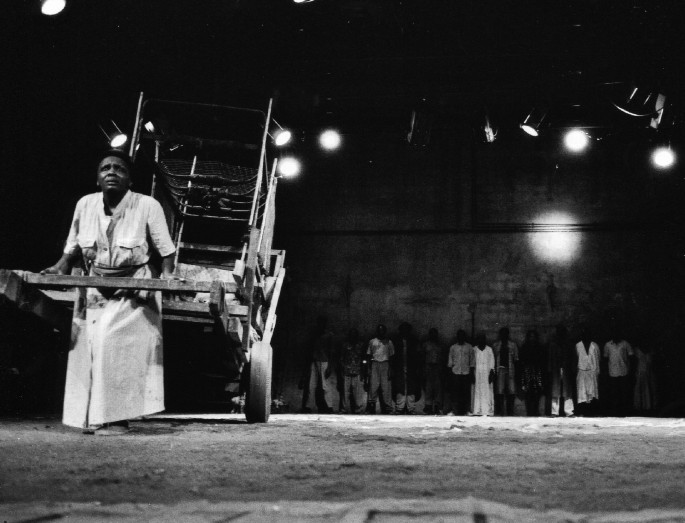
Ngũgĩ wa Thiong’o occupies a singular position in postcolonial thought: he is simultaneously novelist, dramatist, memoirist, and one of the most systematic theorists of cultural decolonization. While many postcolonial writers “write back” to empire through narrative revision, Ngũgĩ advances a comprehensive program for dismantling colonial epistemology—particularly through language, education, and cultural production. His intellectual trajectory moves from early Anglophone realism to radical linguistic decolonization, marking one of the most consequential evolutions in twentieth-century African letters.
A detailed examination of Ngũgĩ as a postcolonial thinker must address five interrelated dimensions: history and anti-colonial struggle, language and linguistic imperialism, education and epistemology, theatre and popular resistance, and his broader theorization of global decolonial futures.
I. Colonial Kenya and the Formation of Historical Consciousness
Ngũgĩ’s thought is inseparable from the colonial history of Kenya under British rule, particularly the violent suppression of the Mau Mau uprising in the 1950s. His early novels—especially Weep Not, Child (1964) and A Grain of Wheat (1967)—emerge from this historical matrix. They explore land dispossession, racial hierarchy, and nationalist struggle.
Colonialism, for Ngũgĩ, is not merely political domination; it is material expropriation. Land alienation in Kenya becomes the central axis of colonial violence. European settlers transform indigenous communal land systems into private property regimes, creating a proletarianized African population.
In this sense, Ngũgĩ’s postcolonial thought is profoundly materialist. His analysis of empire foregrounds economic exploitation rather than solely cultural representation. Colonialism restructures labor, class relations, and agrarian life. Political independence, therefore, cannot suffice if economic hierarchies remain intact.
II. Language as the Core of Colonial Domination
Ngũgĩ’s most influential theoretical intervention appears in Decolonising the Mind. In this work, he argues that language is the primary instrument of colonial subjugation. Colonial education systems imposed European languages—English, French, Portuguese—as vehicles of intellectual legitimacy. Indigenous languages were marginalized as inferior or tribal.
For Ngũgĩ, this linguistic displacement produces what he calls the “colonization of the mind.” When children are punished for speaking their mother tongues and rewarded for fluency in English, they internalize a hierarchy of value. Language becomes a medium through which cultural memory is severed.
Unlike postcolonial theorists who advocate hybridity within colonial languages, Ngũgĩ takes a more radical position: he eventually abandons English as his primary literary medium and begins writing in Gikuyu. This shift is not aesthetic experimentation; it is political praxis.
Writing in Gikuyu re-centers African audiences. It restores literary production to the community rather than to metropolitan readership. Translation into English becomes secondary, not primary. In this gesture, Ngũgĩ challenges the global literary market’s dependence on colonial languages.
III. Education and Epistemic Reorientation
Ngũgĩ’s critique extends to colonial education curricula. He argues that African students were trained to view Europe as the center of civilization and Africa as peripheral. Canonical British literature dominated syllabi, while African oral traditions and histories were excluded.
Decolonization, therefore, must include curricular transformation. Literature departments in Africa should not replicate European models but foreground African texts and epistemologies. This does not require isolationism but demands re-centering.
For Ngũgĩ, epistemic liberation precedes political autonomy. If knowledge production remains Eurocentric, postcolonial societies risk reproducing colonial hierarchies internally.
His approach anticipates later decolonial theory that interrogates the geopolitics of knowledge. However, Ngũgĩ’s intervention is grounded in specific institutional activism—curricular reforms at the University of Nairobi in the late 1960s and 1970s.
IV. Theatre and Popular Resistance
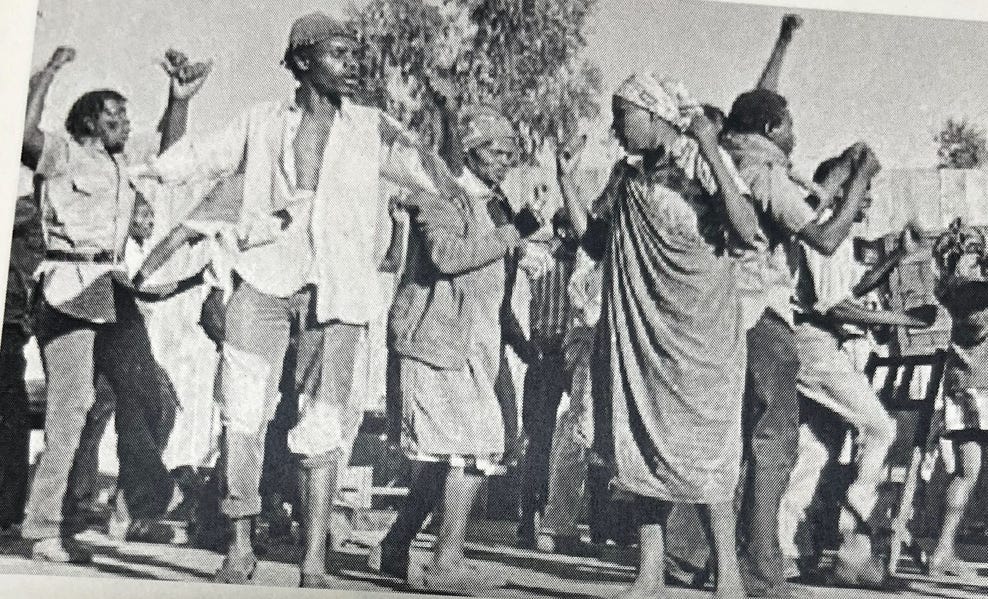
Ngũgĩ’s postcolonial thought is not confined to academic discourse; it is enacted in cultural practice. The Kamiriithu Community Education and Cultural Centre became a pivotal site for revolutionary theatre. The play Ngaahika Ndeenda (“I Will Marry When I Want”), co-written with Ngũgĩ wa Mĩriĩ, was performed in Gikuyu and addressed class exploitation in post-independence Kenya.
The Kenyan government viewed the production as subversive. Ngũgĩ was detained without trial in 1977. During imprisonment, he wrote the novel Devil on the Cross on prison-issued toilet paper—again in Gikuyu.
This episode illustrates a crucial dimension of his postcolonial philosophy: decolonization is incomplete if post-independence elites reproduce colonial economic structures. Ngũgĩ’s critique shifts from anti-colonial nationalism to anti-neo-colonial analysis. Independence without structural transformation results in comprador bourgeoisie domination.
Thus, his postcolonial thought encompasses both colonial and postcolonial state critique.
V. Neo-Colonialism and the Global System
Ngũgĩ extends his analysis beyond Kenya to the global capitalist order. Multinational corporations, international financial institutions, and cultural industries perpetuate economic dependency in formerly colonized nations.
Language remains central here as well. English operates as global economic currency. While offering access to transnational mobility, it also reinforces asymmetrical power structures. Ngũgĩ does not deny practical realities but insists on resisting linguistic erasure.
His later work, including Globalectics: Theory and the Politics of Knowing, proposes a model of interconnected yet polycentric cultural exchange. “Globalectics” envisions the world as network of interacting centers rather than a hierarchy dominated by Europe or North America.
VI. Theoretical Position within Postcolonial Thought
Ngũgĩ’s thinking differs from several other postcolonial paradigms:
- Unlike certain strands of poststructuralist postcolonial theory, his work retains strong materialist grounding.
- Unlike purely nationalist writers, he interrogates post-independence class formation.
- Unlike theorists who embrace linguistic hybridity within colonial languages, he advocates linguistic return to indigenous tongues.
His thought intersects with Marxist analysis, anti-imperialist theory, and cultural nationalism, yet it resists reduction to any single category.
Crucially, Ngũgĩ does not romanticize precolonial past. He acknowledges internal hierarchies but maintains that cultural autonomy is prerequisite for equitable transformation.
VII. Critiques and Counterpoints
Some critics argue that exclusive emphasis on indigenous languages risks limiting global readership. Others suggest that hybridity within English can itself subvert imperial authority.
Ngũgĩ responds that the issue is not purity but power. Who defines literary legitimacy? Who controls publishing infrastructure? Writing in African languages challenges the economic logic of global literary markets.
The debate reflects broader tensions in postcolonial studies between strategic appropriation and radical separation.
Conclusion: Decolonization as Ongoing Praxis
Ngũgĩ wa Thiong’o’s significance as a postcolonial thinker lies in his integration of theory and practice. He does not confine decolonization to symbolic reinterpretation; he demands structural transformation of language, education, economy, and culture.
Colonialism, in his view, persists not only through foreign rule but through internalized hierarchies and global capitalism. Decolonizing the mind is not metaphorical—it is pedagogical, linguistic, and institutional.
His intellectual journey—from Anglophone novelist to Gikuyu theorist of globalectics—embodies the very process he advocates: a reorientation of cultural gravity away from imperial centers.
In the landscape of postcolonial thought, Ngũgĩ stands as one of its most uncompromising voices—insisting that liberation must occur not only in political institutions but in the languages through which reality itself is imagined.