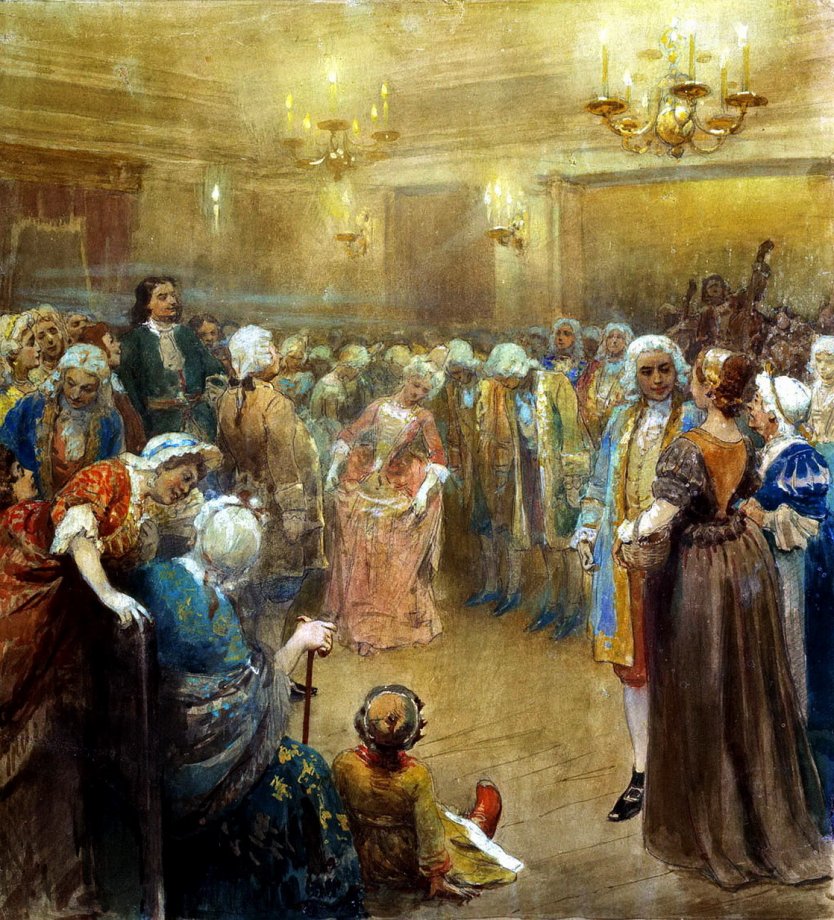
A sustained realist reading of Anna Karenina by Leo Tolstoy demonstrates why the panoramic social novel remains realism’s most comprehensive genre. Tolstoy does not isolate private passion from public structure; rather, he embeds emotion within law, custom, class hierarchy, agrarian reform, bureaucratic routine, and the minute textures of daily life. The novel’s famous opening—“All happy families resemble one another…”—announces a thesis about domestic variation within social pattern. Realism here is not merely descriptive fidelity; it is the disciplined representation of how individual desire collides with institutional form.
What follows is a detailed study organized under substantial thematic headings. Each section develops how Tolstoy’s narrative techniques—multiperspectival focalization, social embedding, temporal breadth, moral commentary without melodrama—constitute a high achievement of realism.
I. The Social Novel as Realism’s Most Adequate Form
Realism requires space—space to stage institutions, to show causality unfolding gradually, to interlace private life with public structures. The short story can depict a slice of life; the novel of manners can capture a narrow circle. But the panoramic social novel can hold an entire society in motion. Anna Karenina ranges across St. Petersburg drawing rooms, Moscow households, provincial estates, railway platforms, bureaucratic offices, hunting fields, and agricultural experiments. It accommodates:
- Multiple central plotlines (Anna/Vronsky; Levin/Kitty; Stiva/Dolly)
- Legal frameworks (marriage, custody, divorce)
- Economic structures (estate management, peasant labor, debt)
- Political debates (liberal reform, zemstvo institutions)
- Religious and moral discourse
This capaciousness enables realism to render causality not as mechanical determinism but as social interdependence. No character exists in isolation; each is implicated in a network of expectations, reputations, and material conditions.
II. Narrative Architecture and Interwoven Plots
Tolstoy constructs the novel through parallel and intersecting arcs. Anna’s adulterous passion with Count Vronsky is counterbalanced by Konstantin Levin’s search for meaning and domestic harmony with Kitty Shcherbatskaya. Meanwhile, Stiva Oblonsky’s habitual infidelity and Dolly’s endurance of marriage provide an everyday baseline.
The architecture itself is realist: it refuses to allow a single sensational plot to dominate. Anna’s story, though dramatic, is embedded within the ordinary routines of family life. Levin’s agrarian concerns—crop yields, peasant relations, estate reform—occupy as much narrative space as Anna’s soirées. This proportionality is crucial. Realism distributes attention across high drama and mundane detail, implying that both belong equally to social truth.
Tolstoy also manipulates temporal pacing with care. Anna’s passion intensifies gradually through balls, glances, train encounters. Levin’s maturation unfolds through seasons, failed proposals, estate work, illness, marriage, and childbirth. The slow accrual of experience replaces abrupt melodramatic shifts.
III. Anna Karenina: Passion within Constraint
Anna’s trajectory is often read as romantic tragedy. A realist reading situates her not as abstract emblem of desire but as woman enmeshed in Russian aristocratic society. She is married to Alexei Karenin, a high-ranking bureaucrat whose identity is shaped by public duty and religious propriety. Their marriage is loveless yet socially stable.
When Anna meets Vronsky at a Moscow ball, attraction ignites not as destiny but as circumstance. The railway platform scene—where a worker is accidentally killed—introduces a motif of modernity’s impersonal force. Yet Tolstoy does not load this with heavy symbolism; rather, it establishes atmosphere of foreboding grounded in plausible accident.
Anna’s affair develops through incremental steps: shared glances, repeated encounters, mounting emotional intensity. She struggles internally with guilt, maternal devotion to her son Seryozha, and craving for authenticity. The social consequences of adultery are not abstract; they are concrete. She becomes excluded from drawing rooms, denied legal divorce without humiliating confession, deprived of custody.
Realism appears in Tolstoy’s refusal to idealize Anna’s passion. Her jealousy grows; her dependence on Vronsky deepens; her isolation magnifies suspicion. Psychological disintegration is shown as interaction between inner turmoil and social ostracism. The tragedy is neither purely moral nor purely societal; it emerges from their intersection.
IV. Karenin: Bureaucracy and Emotional Formalism
Alexei Karenin is frequently caricatured as cold husband. Tolstoy’s realism complicates him. Karenin is product of bureaucratic culture—precise, procedural, concerned with reputation. His moral vocabulary is shaped by Orthodox Christianity and state service.
When he discovers Anna’s affair, his responses are not violent but administrative. He considers legal separation, public scandal, and political ramifications. His decision-making is slow, circumscribed by social codes. Even his moment of apparent magnanimity—when Anna nearly dies in childbirth—arises within framework of religious duty rather than spontaneous romantic forgiveness.
Realism lies in Tolstoy’s capacity to show how institutional identity constrains emotional expression. Karenin is not monster; he is a man whose inner life has been subordinated to public role.
V. Vronsky: Aristocratic Masculinity and Displacement
Count Vronsky begins as confident cavalry officer—handsome, charming, accustomed to flirtation. His pursuit of Anna seems initially consistent with aristocratic libertinism. Yet as the affair becomes permanent rupture, he experiences displacement. His military career stalls; society’s admiration cools; he follows Anna into semi-exile.
Tolstoy portrays Vronsky’s love as genuine yet limited. He cannot fully comprehend Anna’s psychological anguish. His attempts to maintain dignity clash with her mounting insecurity. The relationship becomes strained by unequal costs—Anna sacrifices reputation and child; Vronsky sacrifices status but retains mobility.
Again, realism resists romantic absolutism. Love is shaped by gendered privilege and social expectation.
VI. Levin: Agrarian Realism and Moral Inquiry
Konstantin Levin’s storyline grounds the novel in rural materiality. His concerns—harvest techniques, peasant labor relations, agricultural modernization—are described with documentary specificity. Tolstoy draws upon his own estate management experience, rendering plowing methods, wage negotiations, and seasonal rhythms in detail.
Levin’s philosophical quest—struggle with faith, doubt, purpose—unfolds alongside physical labor. His failed first proposal to Kitty, his self-doubt, his reconciliation with family life—these experiences progress gradually.
Realism appears in the way Tolstoy situates existential questions within everyday labor. Levin’s ultimate spiritual insight does not arrive through miraculous revelation but through patient reflection on ordinary acts—working fields, caring for wife, listening to peasant wisdom.
VII. Kitty and Dolly: Domestic Realism
Kitty’s development from romantic adolescent to mature wife illustrates realist psychology. Her infatuation with Vronsky, disappointment, illness, and eventual union with Levin occur across carefully staged episodes. Tolstoy traces her interior shifts with empathy.
Dolly Oblonsky represents domestic endurance. Her husband Stiva’s infidelity recurs; she navigates financial strain, childcare, social humiliation. Tolstoy renders household management—clothing budgets, servants’ wages, children’s illnesses—with granular detail.
These depictions elevate domestic labor to narrative significance. Realism insists that such routines constitute the fabric of life.
VIII. Marriage as Legal and Social Institution
Marriage in the novel is not romantic abstraction; it is juridical structure with consequences. Anna cannot obtain divorce without Karenin’s consent and public confession. Custody laws favor father. Social respectability determines invitations and alliances.
Levin and Kitty’s marriage offers contrast—not idealized, but negotiated daily. They quarrel, reconcile, adjust expectations. Tolstoy shows how intimacy is sustained through mundane compromise.
By embedding passion within legal constraint, Tolstoy demonstrates realism’s institutional awareness.
IX. Class Structure and Social Surveillance
Aristocratic society functions as surveillance network. Balls, theatre outings, church visits—each occasion becomes stage for reputation management. Anna’s exclusion from opera is not symbolic gesture but socially plausible consequence.
Meanwhile, peasant life occupies different register. Levin’s interactions with laborers reveal tensions between paternalism and reform. Class difference structures speech patterns, labor conditions, and access to justice.
Realism thrives on such stratification.
X. Trains and Modernity
The railway appears repeatedly—Anna’s first meeting with Vronsky, her final suicide. Yet Tolstoy avoids overt symbolism. Trains are modern infrastructure, accelerating mobility and industrial change. They also produce accidents and anonymity.
Anna’s final act—throwing herself before a train—is grounded in psychological despair and realistic opportunity. The scene unfolds with sensory precision: crowd noise, iron wheels, physical impact.
Realism refuses operatic flourish; tragedy emerges through plausible sequence.
XI. Psychological Depth without Excess
Tolstoy enters characters’ minds fluidly, yet he maintains proportionality. Anna’s jealousy intensifies through incremental suspicion. Levin’s spiritual crisis builds through accumulated doubt.
The narrative voice occasionally offers philosophical commentary, but it does not dictate moral verdict. Readers are invited to observe complexity rather than absorb sermon.
XII. The Ending: Ordinary Continuation
After Anna’s death, the novel does not conclude immediately. It turns to Levin’s existential reflections and family life. This structural decision underscores realism’s commitment to continuity. Individual tragedy does not halt social movement.
Levin’s final recognition—that goodness lies in living for others—emerges through quiet insight, not dramatic proclamation.
XIII. Realism versus Romanticism and Naturalism
Unlike romantic tragedy, Anna Karenina avoids glorifying passion as transcendent destiny. Unlike naturalism, it does not reduce characters to deterministic forces. Instead, it shows interaction between choice and constraint.
Tolstoy balances sympathy and critique. Anna is neither saint nor monster; she is human within society.
XIV. Conclusion
A realist reading of Anna Karenina demonstrates the social novel’s unparalleled capacity to represent life in its layered complexity. Tolstoy integrates passion, politics, economy, law, religion, and domestic routine into unified whole. Characters are shaped by context yet retain interiority.
Realism here becomes ethical act of attention—to ordinary labor, to marital compromise, to class tension, to the slow erosion of hope. The novel’s greatness lies not in spectacle but in density—its faithful rendering of how society presses upon individual aspiration.
📊 Summary Table: Realist Reading of Anna Karenina
| 🟦 Category | 🟩 Realist Principle | 🟨 Textual Illustration | 🟥 Critical Insight |
|---|---|---|---|
| 🏘 Society | Interdependence | Salon gossip & ostracism | Reputation shapes destiny |
| 💍 Marriage | Legal constraint | Anna’s divorce struggle | Institution governs emotion |
| 💰 Economy | Material detail | Levin’s estate management | Labor grounds philosophy |
| 🚂 Modernity | Infrastructure realism | Railway scenes | Technology integrated naturally |
| 🧠 Psychology | Gradual development | Anna’s jealousy arc | Inner life shaped socially |
| 👩 Gender | Social roles | Dolly’s domestic labor | Realism honors everyday work |
| ⚖ Morality | Ambiguity | Karenin’s responses | No caricature |
| 🌾 Rural life | Documentary precision | Farming techniques | Material embeddedness |
| 🔄 Ending | Continuity | Levin’s family life | Society persists beyond tragedy |
| 📌 Genre | Social novel | Multi-plot architecture | Breadth enables realism |