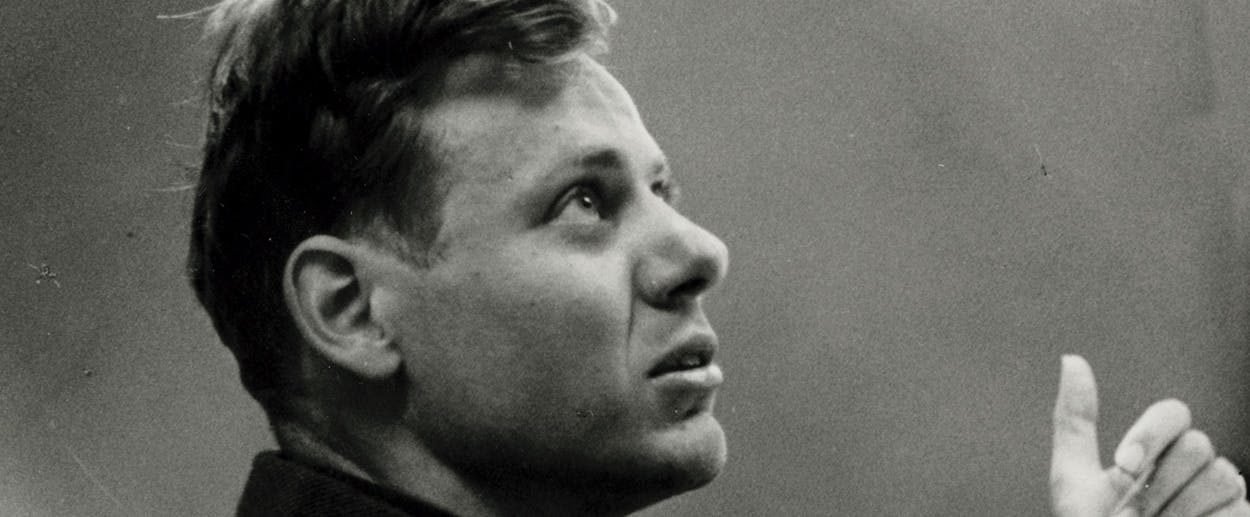
Paul de Man occupies a singular position within twentieth-century literary theory. If Jacques Derrida destabilized the metaphysics of presence at the level of philosophy, de Man relocated deconstruction within literary rhetoric. His intervention was neither merely methodological nor stylistic; it was epistemological. De Man’s central claim is that literary language reveals the impossibility of grounding knowledge in language because rhetoric inevitably undermines reference. Literature does not obscure truth; it exposes the instability of the very structures through which truth is articulated.
Unlike many critics who approach deconstruction as an interpretive strategy, de Man insists that deconstruction is not something imposed upon texts. Rather, texts deconstruct themselves. Criticism merely traces the internal tensions already operative within language. His work is therefore not celebratory of indeterminacy but rigorously diagnostic: it demonstrates that literary discourse contains a structural divergence between what it says and what it does.
Intellectual Formation and Theoretical Context
Born in 1919 in Antwerp, Paul de Man was educated in a European philological tradition before emigrating to the United States. His early exposure to continental philosophy and German Romanticism deeply informed his approach. By the time he joined Yale University in the 1970s, he had already articulated the framework that would define American deconstruction.
His major works—Blindness and Insight (1971), Allegories of Reading (1979), and The Resistance to Theory (1986)—systematically explore how literary texts undermine their own claims to knowledge. While influenced by Derrida, de Man diverges significantly. Derrida interrogates metaphysical hierarchies (speech/writing, presence/absence). De Man focuses instead on rhetorical figures—metaphor, irony, allegory, prosopopoeia—and their epistemological consequences.
His primary corpus is Romanticism, particularly Wordsworth, Rousseau, and Coleridge. This is not accidental. Romantic literature explicitly claims access to truth—whether through memory, imagination, confession, or nature. It therefore provides fertile ground for demonstrating how rhetoric subverts philosophical assurance.
Rhetoric Against Reference
De Man’s foundational distinction is between rhetoric and reference. Referential language aims to describe or denote an external reality. Rhetorical language operates through figures that disrupt literal correspondence. The crucial insight is that these two modes cannot be cleanly separated.
Literary texts often attempt to present rhetorical figures as vehicles of referential truth. De Man demonstrates that such attempts inevitably fail. Once figurality is recognized, literal meaning becomes unstable. The text asserts knowledge but simultaneously reveals that its claims are mediated by tropes that cannot secure referential certainty.
In this sense, deconstruction is not skepticism imposed from outside; it is the recognition that language structurally exceeds epistemological control.
Allegory versus Symbol
A pivotal argument in Blindness and Insight concerns the Romantic elevation of the symbol. Romantic theory (particularly in Coleridge and German idealism) treats symbol as organic unity—part and whole fused simultaneously. Symbol promises reconciliation between subject and object, language and meaning.
De Man counters that Romantic texts do not sustain symbolic unity. Instead, they operate allegorically. Allegory acknowledges temporal distance: the sign points toward a meaning it cannot embody fully in the present. Allegory foregrounds belatedness.
This distinction is not merely aesthetic but philosophical. Symbol implies ontological harmony; allegory implies fragmentation and temporal displacement.
In Wordsworth’s “Ode: Intimations of Immortality,” for example, childhood appears as symbolic origin of transcendental vision. Yet the poem’s structure reveals that childhood is accessible only through memory—through retrospective narration. The origin exists only as loss. Thus, the poem functions allegorically despite its symbolic aspirations.
Allegory becomes the mode through which literature confesses the impossibility of immediate presence.
Blindness and Insight
De Man’s phrase “blindness and insight” encapsulates his dialectical method. Literary texts articulate insights—about memory, selfhood, morality—but remain blind to the rhetorical operations that produce those insights. Criticism reveals that blindness.
This does not mean that authors are naïve. Rather, rhetorical structures exceed conscious intention. The very language that makes insight possible simultaneously undermines it.
Consider Rousseau’s Confessions, which attempts transparent self-disclosure. De Man demonstrates that Rousseau’s reliance on figurative language destabilizes the possibility of unmediated confession. The autobiographical “I” cannot coincide with itself; it becomes object of narrative reconstruction.
Insight (self-knowledge) emerges through blindness (failure to recognize rhetorical mediation).
Prosopopoeia and the Construction of Presence
De Man pays particular attention to prosopopoeia—the figure that gives voice to the absent, the dead, or the inanimate. In Romantic poetry, nature speaks, memory speaks, the past speaks.
Prosopopoeia appears to grant presence. Yet it is purely rhetorical. Language animates what is not present. Thus, metaphysical presence is constructed through figural substitution.
In Coleridge’s The Rime of the Ancient Mariner, the albatross becomes burden of guilt; spectral figures of Death and Life-in-Death appear personified. These figures seem to embody moral reality. Yet they exist only within rhetorical animation. The moral narrative depends upon figural construction.
Prosopopoeia therefore exposes the artificiality of ontological claims.
Temporality and the Impossibility of Origin
For de Man, temporality is central. Allegory unfolds in time; it acknowledges that meaning is always belated. The present cannot coincide with origin.
Romantic poetry frequently attempts to recover origin—childhood vision, natural unity, spiritual insight. De Man shows that such recovery is always narrated from a later position. The origin is accessible only as representation.
Thus, the text becomes allegory of its own belatedness. Meaning does not exist synchronically; it is produced through temporal difference.
The Resistance to Theory
In his later essay “The Resistance to Theory,” de Man argues that theory encounters resistance not from ignorance but from language itself. If literary language exposes the instability of reference, then any attempt to ground interpretation in stable meaning will encounter resistance.
Theory does not impose instability; it confronts what is already there.
De Man’s project is therefore austere. He does not celebrate textual playfulness. He reveals that the very structure of language prevents epistemological closure.
Methodological Distinction
Compared to his Yale contemporaries:
- De Man is less interested in narrative undecidability (Miller).
- He is less inclined toward hermeneutic generosity (Hartman).
- He is more rigorously focused on rhetorical figures and epistemological fracture.
His criticism is analytic rather than expansive. It isolates textual moments where rhetoric subverts philosophical coherence.
De Man in Synthesis
Paul de Man’s deconstruction can be summarized as follows:
Literature does not fail to communicate truth; rather, it demonstrates that truth cannot be secured through language because rhetorical structures always exceed referential intention. Romanticism’s claims to transcendence reveal their own allegorical temporality. Selfhood, memory, morality—all are mediated by figures that undermine immediacy.
Deconstruction, in de Man’s practice, is not interpretive relativism. It is the recognition that literary language exposes the impossibility of stable epistemological grounding.
Conceptual Summary Table
| Theoretical Axis | De Man’s Position | Literary Implication |
|---|---|---|
| Language | Structurally rhetorical | Literal meaning unstable |
| Symbol | Illusion of unity | Undermined by allegory |
| Allegory | Temporal distance | Meaning belated |
| Insight | Produced by rhetoric | Always shadowed by blindness |
| Selfhood | Narratively constructed | Cannot coincide with origin |
| Criticism | Reveals textual self-deconstruction | Does not impose instability |