Revolution, Idealism, and the Defence of Poetry

4
Percy Bysshe Shelley (1792–1822) represents the most radical and intellectually daring strand of late Romanticism. If Wordsworth turns inward to nature, and Keats meditates on beauty and mortality, Shelley directs Romantic energy outward—toward political transformation, philosophical idealism, and visionary prophecy.
He is both lyric poet and revolutionary thinker. His poetry carries a sense of urgency, as if language itself must awaken humanity.
1. Biographical Background
Shelley was born into an aristocratic family in Sussex. He attended Eton and later Oxford. At Oxford, he co-authored a pamphlet titled The Necessity of Atheism, which led to his expulsion in 1811. This early event established his lifelong opposition to religious and political authority.
Important biographical moments:
• 1811 – Expelled from Oxford
• 1813 – Publishes Queen Mab (radical political poem)
• 1816 – Meets Lord Byron in Switzerland
• 1818 – Moves permanently to Italy
• 1822 – Dies in a boating accident near Italy at age 29
Shelley married twice—first Harriet Westbrook, later Mary Wollstonecraft Shelley (author of Frankenstein). His life was marked by controversy, exile, and financial instability.
Like Keats, Shelley died young. His early death strengthened his myth as a doomed visionary.
2. Shelley’s Revolutionary Spirit
Shelley believed poetry could change the world. Unlike Wordsworth, whose early revolutionary hopes faded, Shelley maintained political radicalism throughout his life.
He opposed:
• Monarchy
• Organized religion
• Social inequality
• Political repression
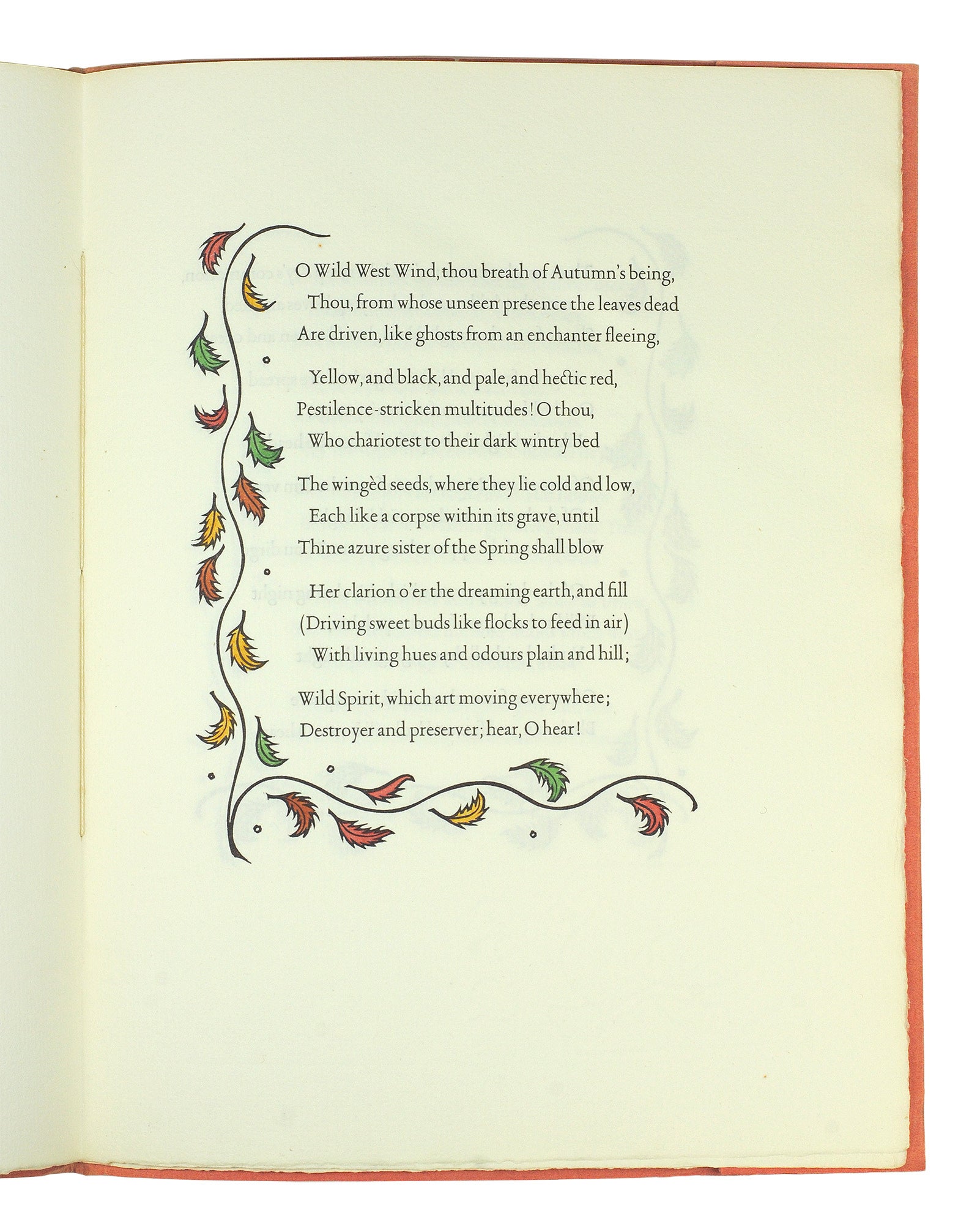
His poem Ode to the West Wind expresses this revolutionary hope:
“Drive my dead thoughts over the universe
Like wither’d leaves to quicken a new birth!”
The wind becomes a symbol of political and intellectual transformation. Shelley sees himself as prophet of renewal.
3. Shelley’s Idealism
Shelley’s poetry is grounded in philosophical idealism—the belief that reality is shaped by mind and spirit rather than material forces.
In poems like:
• Hymn to Intellectual Beauty
• Adonais
• Prometheus Unbound
he explores invisible forces—love, beauty, spirit, freedom—that guide human progress.
For Shelley, the visible world is incomplete. Truth lies beyond material appearance.
This makes his Romanticism more abstract and visionary than Keats’s sensuous immediacy.
4. Shelley and Language
Shelley’s style is musical, elevated, and lyrical. He uses:
• Flowing rhythms
• Rich metaphors
• Symbolic imagery
• Classical allusions
His language often feels airborne—light, swift, and radiant.
If Keats is dense and tactile, Shelley is fluid and expansive.
His poetry seeks not to describe but to inspire.
5. Shelley’s Critical Work: A Defence of Poetry
Shelley’s most important critical essay is A Defence of Poetry, written in response to an essay by his friend Thomas Love Peacock, who had argued that poetry was outdated in modern society.
Shelley argues that poetry is essential to civilization.
Key ideas from the essay:
• Poetry enlarges the imagination.
• Poets are the unacknowledged legislators of the world.
• Moral progress depends on imaginative sympathy.
• Language evolves through poetic innovation.
His famous claim:
“Poets are the unacknowledged legislators of the world.”
This does not mean poets pass laws. It means they shape moral consciousness. They create new ways of feeling and thinking.
For Shelley, poetry precedes political change. Imagination produces social reform.
6. Shelley Compared to Other Romantics
Wordsworth
• Nature as moral teacher
• Retreat from radical politics
• Simpler diction
Coleridge
• Philosophical imagination
• Supernatural symbolism
• Organic theory of art
Keats
• Beauty and mortality
• Sensuous imagery
• Negative Capability
Shelley
• Political revolution
• Idealist philosophy
• Prophetic tone
• Moral power of poetry
Shelley keeps Romanticism politically alive when others turn inward.
7. Shelley and Mortality
Although Shelley writes about hope and renewal, death is never absent. His elegy Adonais, written for Keats, reflects on poetic immortality.
He suggests that the poet does not truly die. Instead, the poet becomes part of eternal spirit.
Shelley himself died tragically in a storm at sea in 1822. His body was cremated on the beach, and his ashes were buried in Rome near Keats’s grave.
This dramatic ending reinforced his image as a Romantic martyr.
8. Shelley’s Lasting Contribution
Shelley’s importance lies in:
• His defense of poetry as moral force
• His belief in imaginative revolution
• His lyrical intensity
• His philosophical idealism
• His prophetic energy
If Blake is visionary and Keats is aesthetic, Shelley is prophetic and political.
He represents Romanticism at its most hopeful and transformative.
Conclusion
Percy Bysshe Shelley is the Romantic poet of idealism and change. He believed poetry could reshape the moral imagination of humanity. Through his lyrical force and philosophical vision, he expanded the meaning of Romanticism.
He stands as the movement’s most radical voice—a poet who believed that imagination is not escape, but revolution.