The emergence of psychoanalysis in the late nineteenth and early twentieth centuries coincides with a broader intellectual rupture in Western thought. Alongside Marxism, psychoanalysis constitutes one of the most sustained critiques of the Enlightenment conception of the human subject. Enlightenment humanism imagined the subject as rational, unified, self-present, and capable of transparent self-knowledge. Reason and logic were presumed to be the guiding principles of human behavior, morality, and culture. Psychoanalysis decisively dismantles this image by insisting that consciousness is neither sovereign nor foundational.
Like Marxism, psychoanalysis begins from the premise that what appears as consciousness is in fact an effect. Where Marxism locates the determinants of consciousness in material relations and economic structures, psychoanalysis situates them in the dynamics of the psyche—above all in the unconscious and the force of libido. Despite their different objects of analysis, both theories converge in their opposition to the Enlightenment subject and in their emancipatory ambitions. Marxism seeks liberation from economic exploitation; psychoanalysis seeks liberation from psychic compulsion. Yet both will later reveal the limits and paradoxes of emancipation itself.
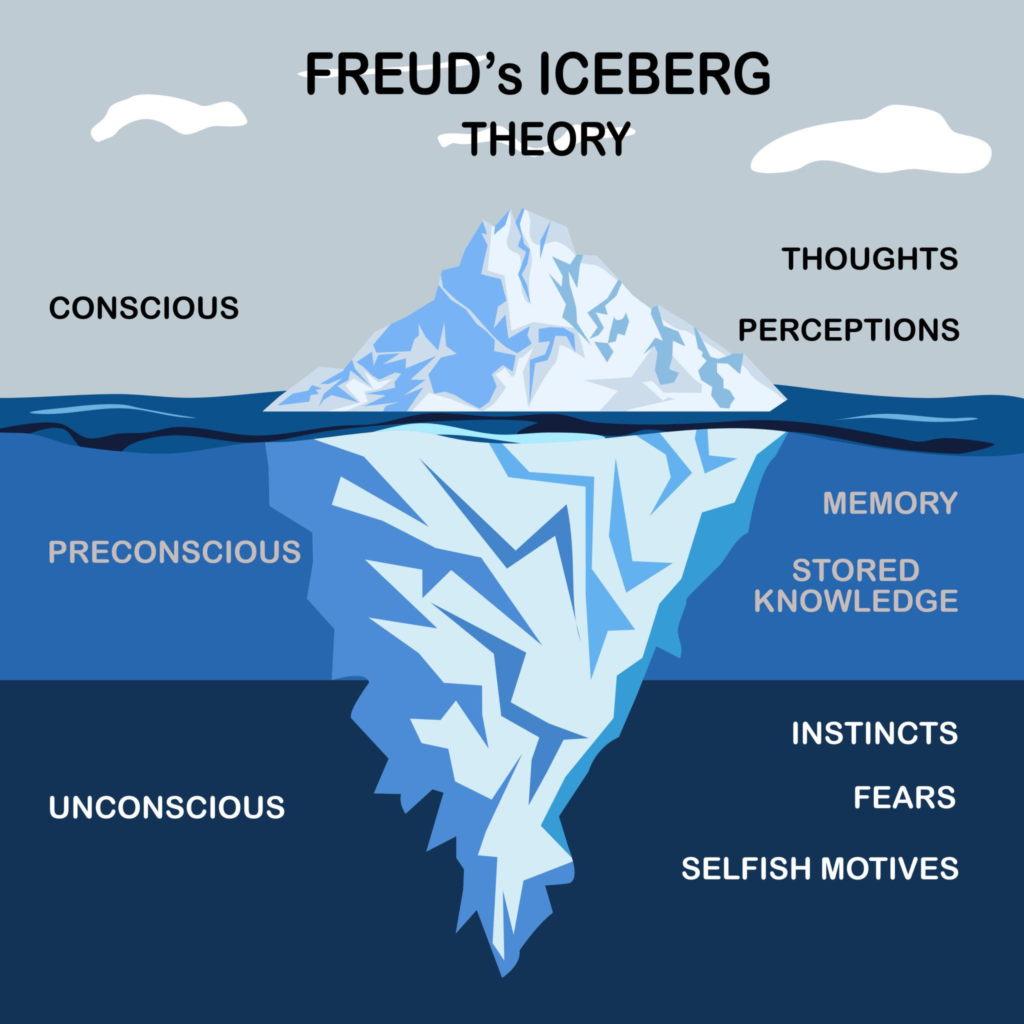
Psychoanalysis enters modern thought through the radical claim that the human subject is divided. With Sigmund Freud, the psyche is no longer identical with conscious thought. Consciousness becomes only a small, unstable region within a much larger psychic economy. Freud’s early topographical model distinguishes between the conscious, the preconscious, and the unconscious. Consciousness refers to what is immediately available to awareness; the preconscious consists of material not presently conscious but easily retrievable; the unconscious, however, is defined by repression. It is not merely unknown but actively kept out of awareness because its contents—wishes, desires, memories—are incompatible with social norms or the ego’s self-image.
The unconscious, in Freud’s theory, is not chaotic. It follows its own logic, governed by what he calls the primary processes: condensation, displacement, and symbolization. These processes become most visible in dreams, which Freud famously calls the “royal road to the unconscious.” Dream interpretation is not an ornamental aspect of psychoanalysis but its epistemological core. Dreams demonstrate that the unconscious speaks—though not directly. The latent content of a dream (the unconscious wish) is transformed into manifest content through dream-work. This transformation disguises desire in symbolic and indirect forms, allowing it to evade censorship.
Dream symbols are therefore not universal codes but culturally and psychically overdetermined signs. A single image may condense multiple meanings; a trivial object may displace intense affect. For literary criticism, this has decisive implications. Literary texts, like dreams, are not transparent representations of meaning. They are symbolic formations in which repressed desires, anxieties, and conflicts are staged through metaphor, narrative displacement, and repetition. Psychoanalytic reading does not decode a hidden message once and for all; it traces the work of desire as it circulates through language.
Freud’s later structural model—id, ego, and superego—deepens this challenge to Enlightenment rationality. The id is the reservoir of drives, governed by the pleasure principle and indifferent to logic, morality, or social norms. The ego emerges as a mediating agency, attempting to reconcile the demands of the id with the constraints of external reality. The superego internalizes social authority, functioning as an internalized law that judges, prohibits, and punishes. What appears as moral conscience is thus not a purely rational faculty but a psychic structure shaped by repression and identification.
The rational subject of Enlightenment philosophy dissolves under this model. Reason is no longer the master of desire; it is one function among others, constantly negotiating forces it does not control. Emancipation, for Freud, consists in making these unconscious determinations partially accessible—to transform blind compulsion into reflective understanding. Yet even in Freud, this emancipation is limited. The unconscious cannot be eliminated; repression is constitutive of civilization itself.
It is precisely this limit that later psychoanalytic theory radicalizes. With Jacques Lacan, psychoanalysis undergoes a decisive structural turn. Lacan re-reads Freud through linguistics and structuralism, proposing that “the unconscious is structured like a language.” The unconscious is no longer understood primarily as a biological repository of instincts but as a network of signifiers that precede and constitute the subject.
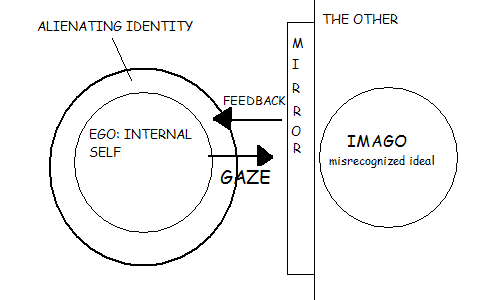
Lacan’s theory of the mirror stage illustrates this shift. The infant’s identification with its mirror image produces an illusion of unity and coherence—a misrecognition that founds the ego. The ego, far from being a rational center, is an imaginary construct, formed through identification with images. This insight fundamentally destabilizes the idea of a unified self. Identity is from the beginning alienated, founded on an external image.
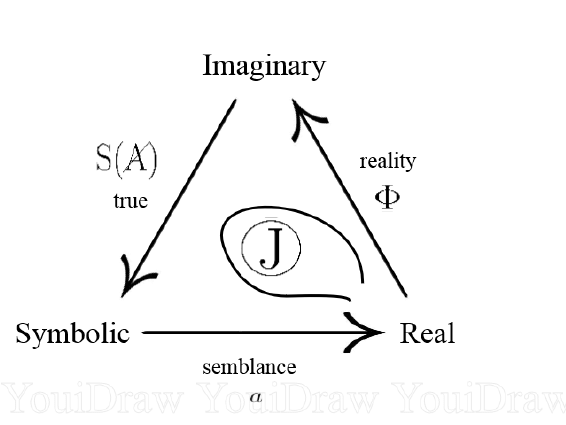
This imaginary identification is later regulated by entry into the Symbolic order: the domain of language, law, and social structure. Language does not merely express thought; it produces subjectivity. To enter language is to accept loss—to submit to naming, prohibition, and difference. At the heart of Lacanian theory lies the notion of lack. Desire arises not from biological need but from absence. What we desire is not an object that can be possessed once and for all but something that is structurally missing.
This is where Lacan introduces objet petit a: the object-cause of desire. It is not a concrete object but a remainder produced by symbolization itself—something promised but never delivered by language. Desire circulates endlessly around this lack, sustaining subjectivity while simultaneously preventing fulfillment. The Real, the third Lacanian order, names what resists symbolization altogether: trauma, impossibility, the point where language fails.
The implications for emancipation are profound. If subjectivity is constituted through language, lack, and misrecognition, then there can be no final liberation from unconscious determination. Analysis does not free the subject from structure; it reveals that there is no outside to it. Emancipation becomes ethical rather than total: an acknowledgment of desire rather than its satisfaction.
From this retrospective perspective, psychoanalysis appears both powerful and unsettling. Like Marxism, it dismantles the Enlightenment myth of rational autonomy. Like Marxism, it promises emancipation. Yet in its later theoretical elaborations, psychoanalysis exposes the limits of that promise. The unconscious cannot be exhausted; desire cannot be fulfilled; lack cannot be repaired.
For literary theory, this is precisely psychoanalysis’s enduring value. Literature becomes a privileged site where the divided subject, the play of signifiers, and the impossibility of closure are staged. Psychoanalytic criticism does not resolve texts; it respects their symptoms. It reads literature not as a mirror of rational consciousness but as a space where the unconscious insists—where meaning is produced through absence, contradiction, and desire.
In this sense, psychoanalysis stands as one of the most radical legacies of modern thought: not because it offers redemption, but because it teaches us why redemption remains structurally impossible.
…………………………………………………………………………………………………………………………………………………………………
Psychoanalysis and Literary Texts: Desire, Lack, and the Failure of Closure
Once psychoanalysis dismantles the Enlightenment fantasy of a rational, unified subject, literature can no longer be read as the transparent expression of conscious intention. Literary texts emerge instead as privileged sites where unconscious desire, repression, and lack find indirect articulation. From a psychoanalytic perspective, literature functions much like the dream: it is structured, symbolic, and overdetermined. Meaning does not lie on the surface but circulates through displacement, metaphor, contradiction, and silence.
Freud’s insight that dreams disguise unconscious wishes through symbolic transformation provides an initial model for psychoanalytic literary interpretation. A literary text, like a dream, converts latent content into manifest form. Narrative events, characters, and images do not simply represent reality; they function symptomatically. What is narrated often matters less than what cannot be narrated directly.
This is particularly visible in tragedy. In Hamlet, the plot ostensibly concerns revenge, yet the play is dominated by delay, hesitation, and obsessive reflection. From a Freudian perspective, Hamlet’s paralysis cannot be explained by rational calculation alone. His inability to act points toward unconscious conflict—specifically, the repressed desire and guilt associated with the father’s murder and the mother’s remarriage. The ghost does not simply reveal a crime; it activates a traumatic knowledge that consciousness cannot assimilate without resistance.
From a Lacanian perspective, Hamlet’s crisis is not merely psychological but structural. Hamlet is caught between the Symbolic demand of the father (“Remember me”) and the collapse of symbolic authority itself. The father returns not as a stabilizing law but as a spectral signifier that cannot be integrated. Desire, here, does not move toward resolution; it circulates endlessly, revealing the impossibility of full symbolic closure.
The same psychoanalytic logic operates in modernist fiction, where the breakdown of Enlightenment subjectivity becomes stylistically explicit. In Mrs Dalloway, consciousness is fragmented, temporal continuity is disrupted, and interior monologue replaces omniscient narration. The novel does not present a stable ego navigating social reality; it exposes consciousness as porous and haunted by the past. Septimus Smith’s trauma cannot be fully articulated in language; it erupts instead as hallucination, repetition, and ultimately self-destruction.
Lacan’s notion of the Real is crucial here. Septimus encounters something that resists symbolization—war trauma that cannot be fully integrated into the Symbolic order of postwar English society. His suicide marks not a personal failure but a structural limit: the point at which language fails to contain experience. Literature, in this sense, does not heal trauma; it stages its impossibility.
Colonial and postcolonial texts further complicate psychoanalytic reading by embedding individual desire within historical dislocation. In A House for Mr Biswas, the protagonist’s obsessive desire for a house is not merely economic or social; it is deeply psychoanalytic. The house functions as objet petit a—the object-cause of desire that promises wholeness but never delivers it. Each attempt to secure stability only produces further lack.
Mr. Biswas’s subjectivity is shaped by symbolic disinheritance. Colonial displacement has fractured the Symbolic order that would ordinarily guarantee identity, lineage, and authority. His desire is therefore endlessly deferred, circulating around an object that can never fully satisfy. The novel exposes the fantasy of emancipation—economic or psychic—as structurally compromised. Even when the house is finally acquired, it arrives as a diminished, fragile substitute rather than a moment of fulfillment.
This logic of lack is even more pronounced in postcolonial trauma narratives such as Disgrace. David Lurie’s fall from academic authority, sexual transgression, and ethical disorientation cannot be resolved through moral reasoning or rational self-correction. His desire is not an expression of sovereign choice but a compulsion that repeatedly undermines his conscious intentions. The novel resists redemption precisely because psychoanalysis teaches us to distrust narratives of purification and moral closure.
Lacan’s theory of desire clarifies why such narratives remain unresolved. Desire does not aim at satisfaction but sustains itself through repetition. Literature that appears bleak or anti-humanist often reveals, more honestly, the structure of subjectivity itself. What Enlightenment humanism called freedom, psychoanalysis recognizes as misrecognition.
Even symbolic systems meant to stabilize meaning—family, nation, law—are revealed as fragile. The superego, far from guaranteeing moral order, often intensifies guilt and aggression. Literary texts expose this paradox relentlessly. The more characters attempt to conform to ideals of rational self-mastery, the more violently desire returns.
From this perspective, psychoanalytic literary criticism does not aim to “solve” texts. It refuses the Enlightenment impulse toward mastery and closure. Instead, it reads literature as a space where unconscious conflict is formally organized and aesthetically sustained. Repetition, ambiguity, and contradiction are not flaws but structural necessities.
Retrospectively, this confirms your central argument: psychoanalysis, like Marxism, arose as a project of emancipation, but its own theoretical rigor ultimately undermines the fantasy of total liberation. Freud sought to bring the unconscious into consciousness; Lacan shows why this project can never be completed. The unconscious is not a hidden content waiting to be revealed but a structural condition of subjectivity itself.
Literature, therefore, does not offer escape from unconscious determination. It offers recognition. It allows readers to encounter lack, desire, and misrecognition not as personal failures but as constitutive features of being human in language. In doing so, psychoanalysis secures its lasting relevance—not as a therapeutic promise, but as one of the most profound critiques of the Enlightenment subject ever articulated.
Psychoanalysis and Literary Texts: Desire, Lack, and the Failure of Closure
Once psychoanalysis dismantles the Enlightenment fantasy of a rational, unified subject, literature can no longer be read as the transparent expression of conscious intention. Literary texts emerge instead as privileged sites where unconscious desire, repression, and lack find indirect articulation. From a psychoanalytic perspective, literature functions much like the dream: it is structured, symbolic, and overdetermined. Meaning does not lie on the surface but circulates through displacement, metaphor, contradiction, and silence.
Freud’s insight that dreams disguise unconscious wishes through symbolic transformation provides an initial model for psychoanalytic literary interpretation. A literary text, like a dream, converts latent content into manifest form. Narrative events, characters, and images do not simply represent reality; they function symptomatically. What is narrated often matters less than what cannot be narrated directly.
This is particularly visible in tragedy. In Hamlet, the plot ostensibly concerns revenge, yet the play is dominated by delay, hesitation, and obsessive reflection. From a Freudian perspective, Hamlet’s paralysis cannot be explained by rational calculation alone. His inability to act points toward unconscious conflict—specifically, the repressed desire and guilt associated with the father’s murder and the mother’s remarriage. The ghost does not simply reveal a crime; it activates a traumatic knowledge that consciousness cannot assimilate without resistance.
From a Lacanian perspective, Hamlet’s crisis is not merely psychological but structural. Hamlet is caught between the Symbolic demand of the father (“Remember me”) and the collapse of symbolic authority itself. The father returns not as a stabilizing law but as a spectral signifier that cannot be integrated. Desire, here, does not move toward resolution; it circulates endlessly, revealing the impossibility of full symbolic closure.

The same psychoanalytic logic operates in modernist fiction, where the breakdown of Enlightenment subjectivity becomes stylistically explicit. In Mrs Dalloway, consciousness is fragmented, temporal continuity is disrupted, and interior monologue replaces omniscient narration. The novel does not present a stable ego navigating social reality; it exposes consciousness as porous and haunted by the past. Septimus Smith’s trauma cannot be fully articulated in language; it erupts instead as hallucination, repetition, and ultimately self-destruction.
Lacan’s notion of the Real is crucial here. Septimus encounters something that resists symbolization—war trauma that cannot be fully integrated into the Symbolic order of postwar English society. His suicide marks not a personal failure but a structural limit: the point at which language fails to contain experience. Literature, in this sense, does not heal trauma; it stages its impossibility.
Colonial and postcolonial texts further complicate psychoanalytic reading by embedding individual desire within historical dislocation. In A House for Mr Biswas, the protagonist’s obsessive desire for a house is not merely economic or social; it is deeply psychoanalytic. The house functions as objet petit a—the object-cause of desire that promises wholeness but never delivers it. Each attempt to secure stability only produces further lack.
Mr. Biswas’s subjectivity is shaped by symbolic disinheritance. Colonial displacement has fractured the Symbolic order that would ordinarily guarantee identity, lineage, and authority. His desire is therefore endlessly deferred, circulating around an object that can never fully satisfy. The novel exposes the fantasy of emancipation—economic or psychic—as structurally compromised. Even when the house is finally acquired, it arrives as a diminished, fragile substitute rather than a moment of fulfillment.

This logic of lack is even more pronounced in postcolonial trauma narratives such as Disgrace. David Lurie’s fall from academic authority, sexual transgression, and ethical disorientation cannot be resolved through moral reasoning or rational self-correction. His desire is not an expression of sovereign choice but a compulsion that repeatedly undermines his conscious intentions. The novel resists redemption precisely because psychoanalysis teaches us to distrust narratives of purification and moral closure.
Lacan’s theory of desire clarifies why such narratives remain unresolved. Desire does not aim at satisfaction but sustains itself through repetition. Literature that appears bleak or anti-humanist often reveals, more honestly, the structure of subjectivity itself. What Enlightenment humanism called freedom, psychoanalysis recognizes as misrecognition.
Even symbolic systems meant to stabilize meaning—family, nation, law—are revealed as fragile. The superego, far from guaranteeing moral order, often intensifies guilt and aggression. Literary texts expose this paradox relentlessly. The more characters attempt to conform to ideals of rational self-mastery, the more violently desire returns.
From this perspective, psychoanalytic literary criticism does not aim to “solve” texts. It refuses the Enlightenment impulse toward mastery and closure. Instead, it reads literature as a space where unconscious conflict is formally organized and aesthetically sustained. Repetition, ambiguity, and contradiction are not flaws but structural necessities.
Retrospectively, this confirms your central argument: psychoanalysis, like Marxism, arose as a project of emancipation, but its own theoretical rigor ultimately undermines the fantasy of total liberation. Freud sought to bring the unconscious into consciousness; Lacan shows why this project can never be completed. The unconscious is not a hidden content waiting to be revealed but a structural condition of subjectivity itself.
Literature, therefore, does not offer escape from unconscious determination. It offers recognition. It allows readers to encounter lack, desire, and misrecognition not as personal failures but as constitutive features of being human in language. In doing so, psychoanalysis secures its lasting relevance—not as a therapeutic promise, but as one of the most profound critiques of the Enlightenment subject ever articulated.