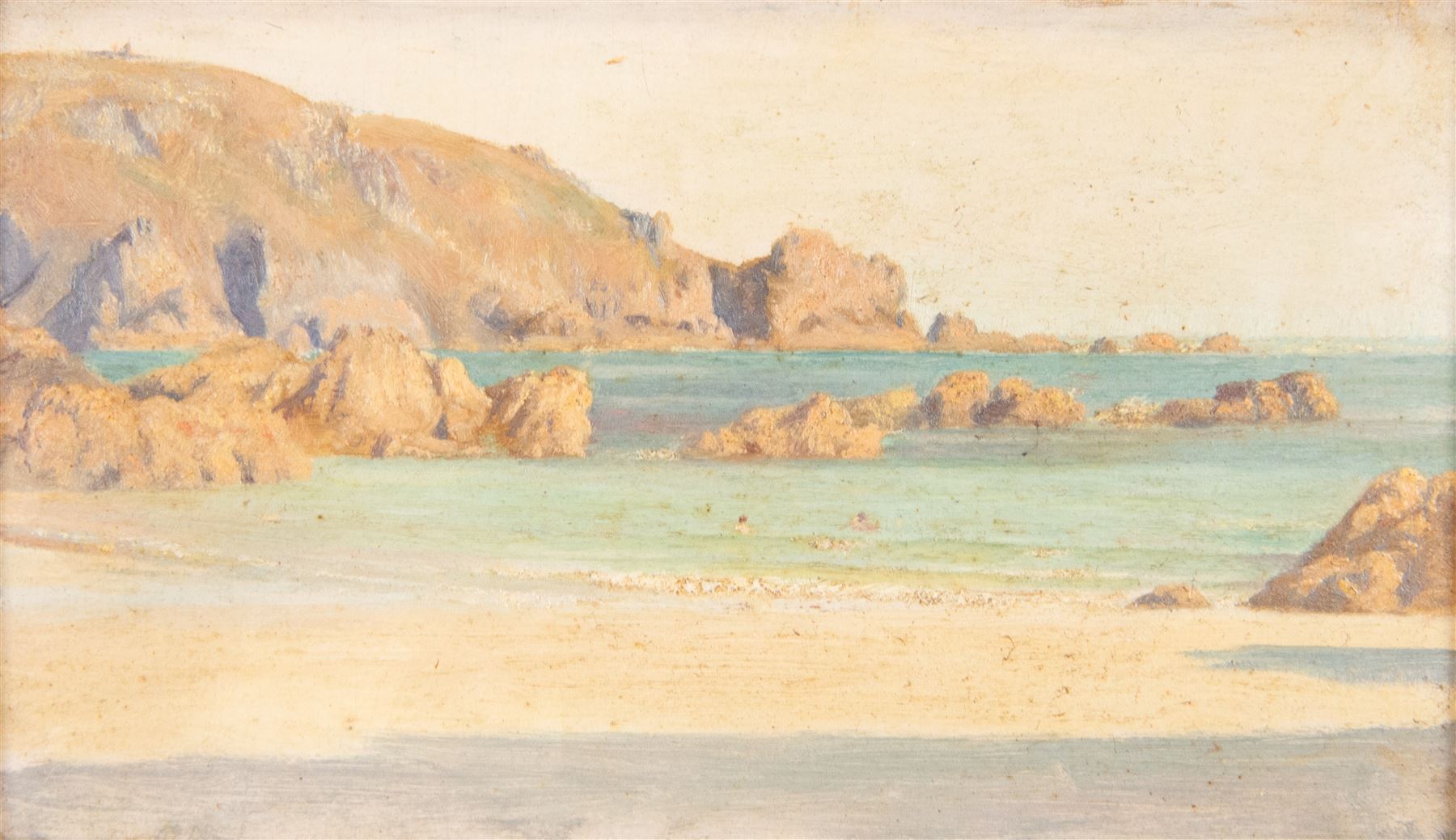
An impressionist reading of To the Lighthouse by Virginia Woolf reveals a narrative governed less by event than by perception, less by causality than by atmosphere, less by plot than by the subtle modulation of consciousness across time. If literary impressionism aims to render the fleeting textures of lived experience—light falling across walls, voices crossing a dinner table, the slow drift of thought against memory—then To the Lighthouse stands as one of its most refined achievements.
Unlike expressionism, which distorts external reality to project interior crisis, impressionism in Woolf’s novel remains delicately attentive to nuance. Reality is not exaggerated but refracted. Objects shimmer through changing angles of awareness; time thickens and thins; identities blur under shifting light. The novel becomes a prose equivalent of an impressionist seascape—waves of consciousness overlapping under a mutable sky.
I. Structural Overview: Three Movements of Perception
The novel unfolds in three parts: “The Window,” “Time Passes,” and “The Lighthouse.” Each section stages a different relationship between perception and time.
In “The Window,” the Ramsay family and their guests gather at their summer home on the Isle of Skye. Mrs. Ramsay promises her son James that they may visit the lighthouse the next day if weather permits. Mr. Ramsay, governed by rational pessimism, predicts unfavorable conditions. This minor disagreement reverberates through the consciousness of those present.
The narrative moves fluidly among interior monologues—Mrs. Ramsay’s maternal reflections, Mr. Ramsay’s philosophical anxieties, Lily Briscoe’s artistic struggles, and James’s simmering resentment. The dinner scene becomes central tableau in which shifting impressions form fragile unity.
“Time Passes” condenses a decade into a brief, lyrical interlude. The house stands empty; war erupts; Mrs. Ramsay dies; two children perish; the family disperses. These events are mentioned parenthetically, almost incidentally, while attention lingers on wind, dust, decay.
In “The Lighthouse,” survivors return. Lily resumes her painting; Mr. Ramsay sails with James and Cam toward the lighthouse. The long-delayed journey occurs quietly. Lily completes her painting in moment of interior clarity.
The novel ends not with dramatic transformation but with achieved perception.
II. Impressionism and the Fluidity of Consciousness
Woolf’s narrative dissolves rigid boundaries between minds. Free indirect discourse allows the narrative voice to slip seamlessly from one consciousness to another. We inhabit Mrs. Ramsay’s warmth, then Mr. Ramsay’s insecurity, then Lily’s quiet observation.
This fluidity reflects impressionist aesthetics: reality appears differently depending on angle of view. The same gesture—Mr. Ramsay’s demand for sympathy—feels oppressive to Lily, poignant to Mrs. Ramsay, bewildering to children.
No authoritative perspective adjudicates. Truth exists as shifting interplay of impressions.
III. The Dinner Scene as Impressionist Canvas
The dinner in “The Window” exemplifies impressionist composition. The scene unfolds slowly, with attention to light from candles, arrangement of dishes, rhythm of conversation. Mrs. Ramsay orchestrates social harmony through subtle gestures.
Conversation drifts between trivial remarks and philosophical reflections. Each participant experiences dinner differently. For Mrs. Ramsay, it is triumph of unity; for Lily, it is study in perception; for Mr. Ramsay, it is reassurance of esteem.
The narrative accumulates details like brushstrokes. Only retrospectively does the reader sense cohesion. The dinner’s emotional impact lies not in event but in atmosphere.
IV. Light and the Sea
Light permeates the novel. The beam from the lighthouse sweeps rhythmically across walls. The sea shifts color under passing clouds. Windows frame changing perspectives.
These descriptions are not ornamental. They anchor perception in sensory immediacy. The sea does not symbolize abstractly; it modulates mood. Calm water invites reflection; turbulent waves mirror agitation.
Impressionist painters sought to capture transient effects of light. Woolf translates this into prose, allowing environment to alter interior states.
V. Time as Elastic Duration
Clock time barely registers. Instead, interior duration dominates. A brief moment—Mrs. Ramsay knitting while contemplating mortality—expands into extended meditation.
“Time Passes” intensifies impressionist treatment of temporality. Years pass in pages, yet narrative attention rests on dust settling, boards creaking, air moving through rooms. Human events become secondary to atmospheric continuity.
This inversion challenges conventional narrative priorities. What matters is not sequence but sensation.
VI. Mrs. Ramsay: Presence as Impression
Mrs. Ramsay exists largely through how others perceive her. She embodies warmth, beauty, maternal authority. Yet her inner monologue reveals vulnerability and awareness of transience.
After her death, she persists as lingering impression in memory. Characters recall her gestures, voice, light on her face. She becomes aura rather than active figure.
Impressionism preserves presence through memory’s shimmer rather than dramatic action.
VII. Lily Briscoe and the Aesthetics of Vision
Lily’s struggle to complete her painting mirrors Woolf’s artistic method. She grapples with how to arrange forms on canvas—to capture fleeting perception without falsifying it.
Her doubt—“Women can’t paint, women can’t write”—reflects social pressures. Yet her artistic persistence culminates in final stroke that brings balance.
Lily’s realization—“I have had my vision”—signals impressionist epiphany. The vision is not grand revelation but alignment of perception.
VIII. Masculine Rationality and Fragile Ego
Mr. Ramsay’s philosophical ambition contrasts with Mrs. Ramsay’s intuitive presence. He measures intellectual achievement alphabetically, fearing he will never reach “R.” His insecurity surfaces in demand for sympathy.
The narrative does not caricature him; it filters his anxiety through interior monologue. Impressionism humanizes through nuance rather than satire.
IX. War and Silence
World War I occurs largely offstage. Its devastation appears parenthetically: Andrew killed in battle; Prue dies in childbirth. These announcements are brief, almost understated.
Impressionism avoids sensationalism. Tragedy is absorbed into atmosphere. The house endures wind and decay as human lives vanish quietly.
X. The Lighthouse Journey
In final section, Mr. Ramsay sails with children toward lighthouse. The journey fulfills long-postponed promise. Yet its significance lies in perception: James’s hatred softens; Cam feels shifting loyalty.
The lighthouse, once distant beacon of longing, becomes ordinary structure approached in daylight. Its mystique dissolves into concrete presence.
Impressionism reveals how desire transforms object into aura.
XI. Completion Without Closure
Lily completes her painting at same moment the boat reaches lighthouse. The convergence is internal rather than dramatic. No celebratory climax ensues.
The novel closes with sense of balance achieved—not permanent resolution but temporary coherence.
Impressionism values such quiet consummation.
XII. Conclusion
An impressionist reading of To the Lighthouse reveals a novel structured around perception’s subtle choreography. Light sweeps across walls; sea shifts hue; memories ripple through consciousness. Characters are defined less by action than by how they are seen.
Woolf captures duration as lived texture. Past and present interpenetrate; presence lingers after absence; art crystallizes ephemeral impression into form.
The novel stands as luminous example of literary impressionism—its prose shimmering with nuance, its structure composed of delicate yet persistent strokes.
🎨 Summary Table: Impressionist Reading of To the Lighthouse
| 🟦 Category | 🟩 Impressionist Principle | 🟨 Textual Manifestation | 🟥 Critical Insight |
|---|---|---|---|
| 👁 Perspective | Fluid focalization | Shifting interior monologues | Reality refracted through minds |
| 🌊 Environment | Atmosphere shapes mood | Sea & lighthouse beam | Setting modulates perception |
| ⏳ Time | Elastic duration | “Time Passes” section | Sensation outweighs chronology |
| 🍽 Social Scene | Momentary unity | Dinner tableau | Cohesion built from impressions |
| 🎨 Art | Vision through perception | Lily’s painting | Form arises from subtle balance |
| ⚰ Mortality | Quiet integration | Parenthetical deaths | Tragedy absorbed into atmosphere |
| 🚢 Journey | Fulfilled promise | Lighthouse trip | Object transformed by perception |
| 📌 Overall Vision | Life as shimmering continuity | Light & memory interwoven | Impressionism captures ephemeral unity |