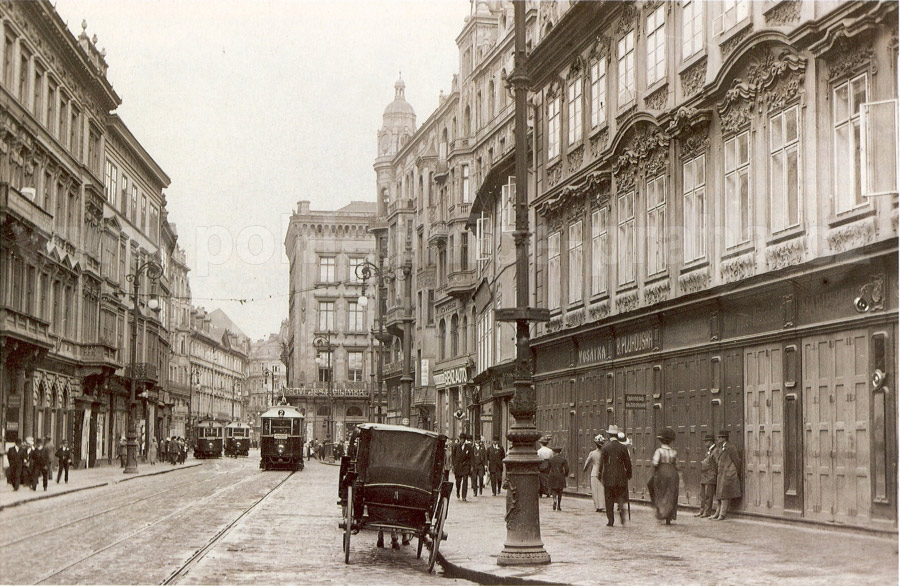
A sustained expressionist reading of The Trial by Franz Kafka reveals a narrative architecture shaped not by mimetic realism but by psychic distortion, existential anxiety, and the externalization of inner dread. While Kafka is often placed within modernism or existentialism, The Trial stands as one of the most compelling prose analogues to early twentieth-century Expressionism—a movement that sought to render subjective intensity rather than objective reality.
Expressionism, emerging prominently in German-language art and drama before and after World War I, rejected naturalist fidelity to empirical surfaces. Instead, it magnified interior states, presenting the world as projection of psychic crisis. In The Trial, Josef K.’s arrest, prosecution, and execution unfold within a world that appears realistic yet functions symbolically and grotesquely. The novel transforms bureaucracy into metaphysical labyrinth, law into abstraction, and space into oppressive architecture mirroring consciousness.
I. Expressionism: Theoretical Coordinates
Expressionism privileges:
- Distortion over realism
- Subjective interiority over objective description
- Anxiety, alienation, and spiritual crisis
- Grotesque exaggeration
- Urban claustrophobia
- Mechanized or dehumanized authority
Rather than presenting the world as it is, expressionist literature renders the world as experienced by the anxious subject. Reality becomes psychic projection. Institutions appear monstrous; space becomes labyrinthine; dialogue becomes stylized and surreal.
Kafka’s Prague setting appears historically plausible, yet its institutional logic resists rational coherence. This instability aligns the novel closely with expressionist dramaturgy.
II. Integrated Summary of the Novel
The novel opens abruptly: Josef K., a bank official, is arrested one morning in his boarding house. Two warders inform him that he is under arrest, though he may continue his daily routine. No clear charge is specified. The arrest is simultaneously trivial and catastrophic.
K. attempts to defend himself rationally. He attends hearings held in cramped attic rooms within working-class districts. The court system appears diffuse and omnipresent yet inaccessible. Clerks, magistrates, and minor officials operate within obscure hierarchy. Each encounter produces more confusion than clarity.
K. seeks assistance from various intermediaries: a lawyer (Huld), a court painter (Titorelli), and acquaintances connected to the judiciary. Each offers partial insight but no resolution. The painter describes three possible outcomes—apparent acquittal, protraction, or actual acquittal (which is said to be nearly impossible). The legal process thus becomes endless postponement.
Throughout the narrative, K.’s professional and social life deteriorates. His confidence erodes. Encounters with women—Fräulein Bürstner, Leni—introduce ambiguous erotic tension but provide no escape.
In the penultimate chapter, a priest recounts the parable “Before the Law,” in which a man waits his entire life for access to the Law, only to die without entry. This allegory encapsulates the novel’s central theme: the Law exists as unattainable transcendence.
Finally, two officials escort K. outside the city to a quarry. Without formal explanation, they execute him by stabbing. His last words—“Like a dog!”—signal humiliation rather than rebellion.
III. Distorted Bureaucracy as Expressionist Architecture
Unlike naturalism, which grounds causality in environment and heredity, expressionism externalizes psychological anxiety. The court system in The Trial is not a coherent institution but a distorted architecture reflecting K.’s existential insecurity.
Attic courtrooms are suffocating; staircases spiral endlessly; offices seem embedded within domestic spaces. The blending of public and private collapses boundaries. The environment appears elastic, shifting according to psychic pressure.
Authority figures are grotesque caricatures rather than realistic bureaucrats. They oscillate between triviality and menace. Their power stems from opacity. Expressionism thrives on such disproportion—ordinary individuals facing incomprehensible structures.
IV. Alienation and the Fragmented Self
Josef K. embodies the expressionist anti-hero. He is neither morally corrupt nor heroically defiant. His identity erodes under institutional scrutiny. At the novel’s outset, he asserts innocence and rational control. Gradually, he internalizes accusation.
Expressionism often depicts crisis of modern subjectivity. The self becomes fragmented under industrial and bureaucratic modernity. K.’s confidence in legal rationality dissolves as he confronts irrational system. His speech grows defensive, repetitive, and anxious.
The arrest functions symbolically. It may represent guilt, existential condition, or modern alienation. Expressionism resists fixed interpretation; ambiguity intensifies anxiety.
V. Space as Psychological Projection
Urban spaces in The Trial operate symbolically. Prague is never fully described; instead, interiors dominate. Rooms feel cramped and overheated. The court offices resemble diseased organs embedded within city’s body.
Expressionist aesthetics frequently compress space to reflect suffocation. K.’s movements become circular; progress appears illusory. The labyrinth motif underscores entrapment.
The quarry execution scene starkly contrasts earlier claustrophobic interiors. Open space offers no liberation. Vastness becomes stage for annihilation.
VI. The Law as Abstract Absolute
In naturalist fiction, institutions are socially explicable. In expressionism, institutions assume metaphysical dimensions. The Law in Kafka’s novel transcends procedural rationality. It appears infinite, inaccessible, and self-justifying.
The parable “Before the Law” condenses this theme. The doorkeeper’s authority depends not on clarity but on deferral. Access is perpetually postponed.
Expressionism converts bureaucratic opacity into spiritual allegory. The novel anticipates existential philosophy: humanity confronts absurd system without guaranteed meaning.
VII. Eroticism and Ambiguity
Female figures in the novel are drawn with heightened sensuality. Leni’s webbed fingers and intense gaze border on grotesque exaggeration. Sexual encounters occur within court-related spaces, collapsing institutional and intimate domains.
Expressionism often merges eroticism with anxiety. Desire becomes unstable, tinged with guilt and power imbalance.
VIII. Language and Narrative Tone
Kafka’s prose remains deceptively plain. The expressionist distortion arises not through ornate language but through structural absurdity. Events unfold matter-of-factly, intensifying estrangement.
Dialogue often repeats bureaucratic phrases devoid of substance. Language itself becomes hollow instrument.
IX. Execution and Existential Closure
K.’s execution lacks legal ceremony. The two officials perform duty mechanically. K. offers minimal resistance. His final humiliation—“Like a dog!”—reflects internalized degradation.
Expressionism rejects redemptive closure. The novel ends with annihilation devoid of transcendence. Meaning remains unresolved.
X. Expressionism versus Naturalism
Where naturalism grounds fate in socio-economic causation, expressionism projects inner crisis outward. In The Trial:
- Determinism is metaphysical rather than biological.
- Environment mirrors psyche rather than producing it.
- Authority is abstract rather than material.
- Anxiety supersedes causality.
The novel thus stands as canonical expressionist prose text, translating theatrical distortion into narrative form.
XI. Conclusion
An expressionist reading of The Trial foregrounds psychic alienation, institutional absurdity, and distorted urban space as projections of existential crisis. Josef K.’s ordeal resists naturalistic explanation; it unfolds within symbolic architecture of dread.
Kafka transforms bureaucracy into metaphysical nightmare. The Law becomes unreachable absolute; guilt becomes ontological condition; execution becomes ritual of modern alienation.
In rendering subjective anxiety as objective reality, The Trial achieves quintessential expressionist vision. The world is not depicted as it is but as it feels under the pressure of incomprehensible authority.
🎨 Summary Table: Expressionist Reading of The Trial
| 🟦 Category | 🟩 Expressionist Principle | 🟨 Textual Manifestation | 🟥 Critical Insight |
|---|---|---|---|
| 🏛 Bureaucracy | Distorted authority | Labyrinthine court system | Institution as psychic projection |
| 🧍 Subjectivity | Fragmented self | K.’s erosion of confidence | Modern identity unstable |
| 🏙 Space | Claustrophobic architecture | Attic courtrooms, narrow corridors | Environment mirrors anxiety |
| ⚖️ The Law | Abstract absolute | “Before the Law” parable | Access to meaning perpetually deferred |
| 😨 Anxiety | Intensified interiority | Persistent uncertainty | Reality shaped by dread |
| 💬 Language | Hollow repetition | Bureaucratic dialogue | Communication emptied of clarity |
| ❤️ Eroticism | Grotesque intimacy | Leni & court spaces | Desire entangled with guilt |
| 🔄 Structure | Circular progression | Endless hearings | No linear resolution |
| ⚰ Ending | Anti-redemptive closure | Execution “like a dog” | Expressionism rejects moral consolation |
| 📌 Overall Vision | World as projection of psychic crisis | Institutional nightmare | Modernity produces existential alienation |