An impressionist reading of The Ambassadors by Henry James discloses a narrative structured almost entirely around the modulation of perception. If impressionism in literature seeks to capture the shifting texture of consciousness—the way reality appears under changing emotional light—then The Ambassadors stands as one of its most technically refined achievements. The novel does not hinge on dramatic action or decisive events; rather, it unfolds as a prolonged education of sensibility. Lambert Strether’s journey to Paris becomes less a mission with objective stakes than an immersion in atmosphere, perspective, and reinterpretation.
James orchestrates the narrative through Strether’s limited but gradually expanding consciousness. The reader is not given an authoritative account of reality; instead, we inhabit Strether’s evolving impressions. Characters, cities, moral positions, even Strether’s own motives, appear differently as his perceptual frame shifts. The novel becomes an extended meditation on seeing—on the ethics, pleasures, and deceptions of perception.
I. Narrative Overview: The Mission to Retrieve
Lambert Strether, a middle-aged American from Woollett, Massachusetts, travels to Paris at the behest of Mrs. Newsome, a wealthy widow to whom he is informally engaged. His task is to retrieve her son, Chad Newsome, who has lingered in Europe under suspected corrupting influences—particularly those of a mysterious woman, Madame de Vionnet.
Strether arrives in Paris expecting decadence and moral decay. Instead, he encounters refinement, subtlety, and aesthetic sophistication. Chad appears transformed—polished, articulate, socially graceful. The rumored scandal with Madame de Vionnet proves complex rather than sordid.
As Strether observes Parisian society, his assumptions soften. He befriends Maria Gostrey, who functions as perceptual guide. He meets the de Vionnets and becomes captivated by their elegance. Gradually, his mission falters. Rather than urge Chad to return to Woollett, he counsels him to remain and fully experience life.
When Mrs. Newsome sends new ambassadors—Strether’s acquaintances from America—to reinforce the original mission, Strether finds himself increasingly alienated from Woollett’s moral rigidity. He discovers that the relationship between Chad and Madame de Vionnet is more intimate than he had allowed himself to see. Ultimately, he advises Chad to return home for pragmatic reasons, yet he himself declines marriage to Mrs. Newsome and chooses to return alone.
The narrative concludes without dramatic rupture. Strether departs Paris altered—not through decisive action but through transformation of perception.
II. Central Consciousness and Impressionist Mediation
James’s method in The Ambassadors exemplifies impressionist narrative technique. The novel is filtered almost entirely through Strether’s consciousness. Events are presented not as objective occurrences but as experienced impressions.
When Strether first sees Chad in Paris, the young man’s transformation astonishes him. Chad appears almost luminous—urbane, refined, aesthetically awakened. Yet the reader must recognize that this impression emerges from Strether’s predisposition to see improvement.
Throughout the novel, James avoids definitive exposition. Madame de Vionnet’s relationship with Chad is never crudely disclosed. Instead, hints accumulate—gestures, pauses, slight tonal shifts in dialogue. The reader assembles meaning from subtle clues.
Impressionism operates here through narrative withholding. Certainty dissolves into nuance.
III. Paris as Atmospheric Field
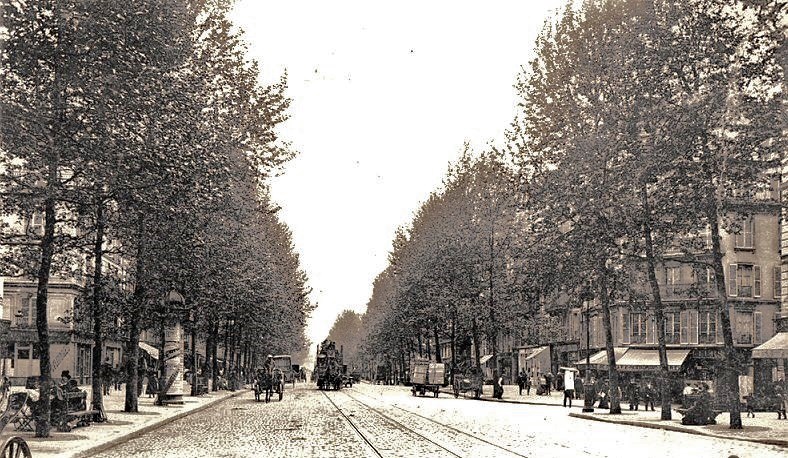
Paris in the novel is less geographical city than perceptual environment. Streets shimmer; riverbanks invite contemplation; drawing rooms glow with subdued elegance. Strether’s experience of Paris evolves from suspicion to enchantment.
James does not provide exhaustive architectural detail. Rather, he evokes atmosphere through suggestive touches—filtered light, distant carriages, the quality of air at dusk. The city becomes aesthetic field that alters consciousness.
For Strether, Paris awakens latent sensibility. The urban environment functions not as moral threat but as catalyst for perceptual refinement.
IV. The Education of Perception
The novel charts Strether’s gradual reorientation. At first, he views Chad’s situation through Woollett’s moral lens—corruption versus virtue. As he spends time in Paris, he begins to see complexity.
Madame de Vionnet initially appears dignified, maternal, self-possessed. Strether resists suspicion. His impressions of her elegance soften moral judgment. Yet as hints of intimacy surface, his perception shifts again—not into condemnation, but into deeper ambiguity.
This process exemplifies impressionist epistemology: reality unfolds through successive reinterpretations rather than singular revelation.
V. Dialogue as Subtle Shading
James’s dialogue is famously intricate. Characters speak obliquely, circling around implications. Meaning resides in tonal variation rather than explicit declaration.
Conversations between Strether and Maria Gostrey illustrate this dynamic. Maria gently guides his perception, offering commentary that reframes situations. She does not instruct; she modulates.
The reader must attend to inflection and pause. Impressionism thrives on such nuance.
VI. Woollett versus Paris: Tonal Contrast
Woollett represents industrial American pragmatism—direct, moralistic, economically driven. Paris embodies aesthetic refinement and social subtlety.
Yet James resists caricature. Woollett is not villainous; Paris is not wholly virtuous. Instead, the contrast operates atmospherically. Woollett feels rigid; Paris feels fluid.
Strether’s sensibility gravitates toward fluidity. His alienation from Woollett grows as his impressions deepen.
VII. Time and Reflective Delay
The novel unfolds slowly. Long conversations replace dramatic confrontations. Scenes are extended through reflection.
Impressionism privileges duration—the stretching of a moment to explore its texture. Strether’s contemplative walks, his pauses before response, his reconsiderations—all slow narrative tempo.
Time becomes experiential rather than event-driven.
VIII. Moral Ambiguity and Ethical Perception
Perhaps the novel’s most significant impressionist feature lies in its ethical ambiguity. James refuses to condemn Madame de Vionnet or idealize Chad.
Strether’s eventual recognition of their intimacy does not collapse into scandal. Instead, it produces layered understanding. Love may coexist with compromise; refinement may mask dependence.
Ethics emerge through perception rather than decree.
IX. The Scene at Gloriani’s Garden
One of the novel’s central scenes occurs at Gloriani’s garden party. Strether observes social interactions, noting subtle gestures and tonal shifts.
This scene functions much like an impressionist painting of a gathering—figures positioned delicately, colors blending. The event’s significance lies not in action but in atmosphere.
Strether’s internal realization—urging Chad to “live all you can”—arises from immersion in this perceptual field.
X. Recognition and Restraint
When Strether finally witnesses evidence confirming Chad’s intimate relationship with Madame de Vionnet, the scene is restrained. There is no melodrama—only quiet recognition.
This understatement exemplifies impressionism. The emotional impact arises from tonal shift rather than overt confrontation.
XI. The Refusal of Marriage
At the novel’s conclusion, Strether refuses Maria Gostrey’s companionship and declines return to Mrs. Newsome. His decision is not triumphant but contemplative.
He has learned to see more deeply; yet that vision isolates him. Impressionism often ends in reflective solitude rather than dramatic resolution.
XII. Conclusion
An impressionist reading of The Ambassadors reveals a novel structured by perceptual education. Strether’s journey from moral rigidity to nuanced awareness unfolds through atmosphere, dialogue, and reflective delay. Paris becomes luminous field of shifting impressions; characters emerge as tonal variations rather than fixed essences.
James’s narrative technique—central consciousness, withheld exposition, layered dialogue—embodies literary impressionism at its most sophisticated. Reality is never absolute; it is always refracted.
The novel concludes not with decisive moral pronouncement but with heightened sensibility. Strether returns home altered—not because events have changed, but because his perception has.
🎨 Summary Table: Impressionist Reading of The Ambassadors
| 🟦 Category | 🟩 Impressionist Principle | 🟨 Textual Manifestation | 🟥 Critical Insight |
|---|---|---|---|
| 👁 Narrative | Central consciousness | Strether’s filtered view | Reality mediated by perception |
| 🌆 Setting | Atmospheric rendering | Parisian salons & riverbanks | Environment shapes sensibility |
| 🗣 Dialogue | Nuanced implication | Oblique conversations | Meaning emerges indirectly |
| ⏳ Time | Reflective duration | Extended contemplative scenes | Event secondary to perception |
| ❤️ Ethics | Moral ambiguity | Madame de Vionnet’s portrayal | Judgment suspended |
| 🌍 Contrast | Tonal opposition | Woollett vs Paris | Cultural perception shifts |
| 🌿 Social Scene | Impressionistic tableau | Garden party | Atmosphere as narrative force |
| 🔄 Ending | Reflective solitude | Strether’s departure | Vision without resolution |
| 📌 Overall Vision | Life understood through shifting impressions | Education of perception | Impressionism refines moral awareness |